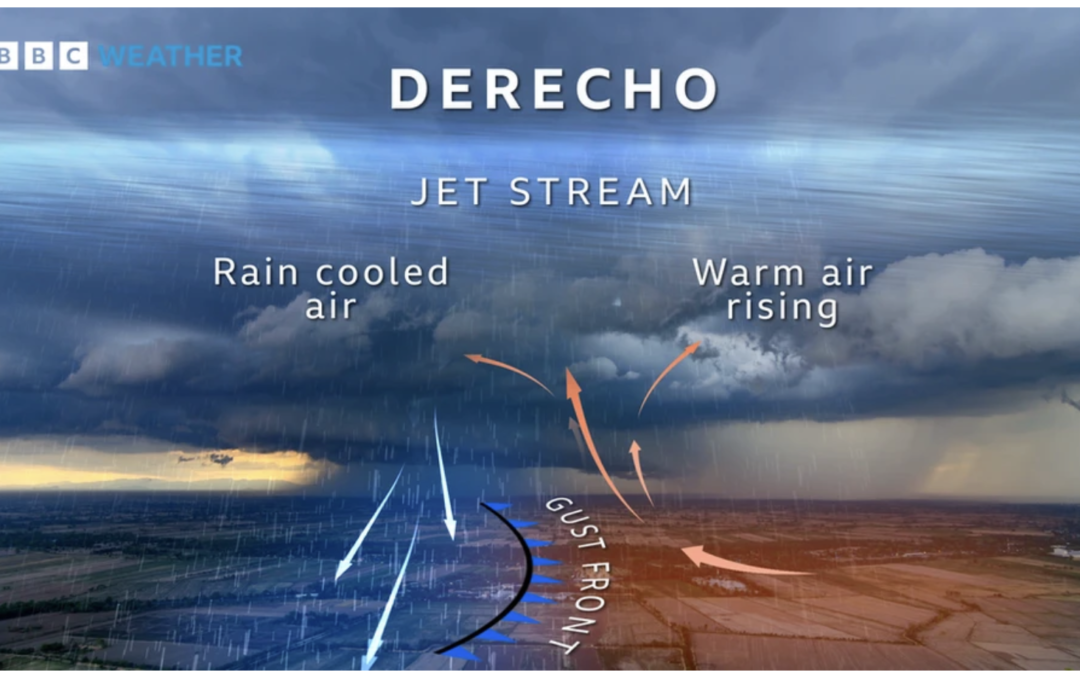
A derecho starts life as a thunderstorm, or cluster of thunderstorms. If conditions are right and there is plenty of warm, humid air at the surface, combined with a strong, straight jet stream, the storm can build into a towering system.
Warm currents of rising air combine with downdrafts of colder, rain-bearing air. These spill out of the bottom of the cloud and spread out horizontally, creating strong bursts of wind. This forces warm air at the surface upwards, creating a “gust front”.
While some minor damage could occur to some Midwest, corn, soybeans and interfere with the soft-red wheat harvest. The odds are low that the important July pollination month for Midwestern corn will see any extensive hot, dry weather. The reason? While El Niño just formed and is weak to start, it may act more like a “strong El Niño”, which rarely results in July Midwest droughts.
Click here to download our FREE Climatelligence Substack App.We will be offering soon a very inexpensive new, commodity-weather service.
See the video regarding two potential Derechos over the next week
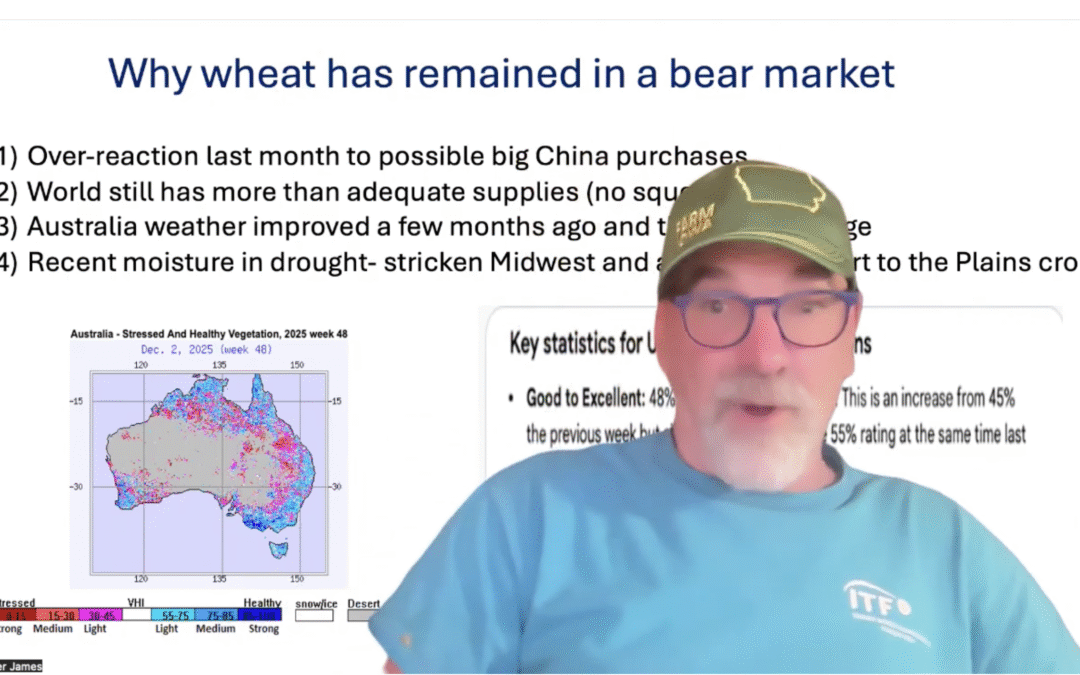
Our video below addresses three very important climatic teleconnections that may worsen the U.S. wheat crop in the weeks ahead. April and May are critical times for wheat crops in Europe, Ukraine, and most of the U.S.
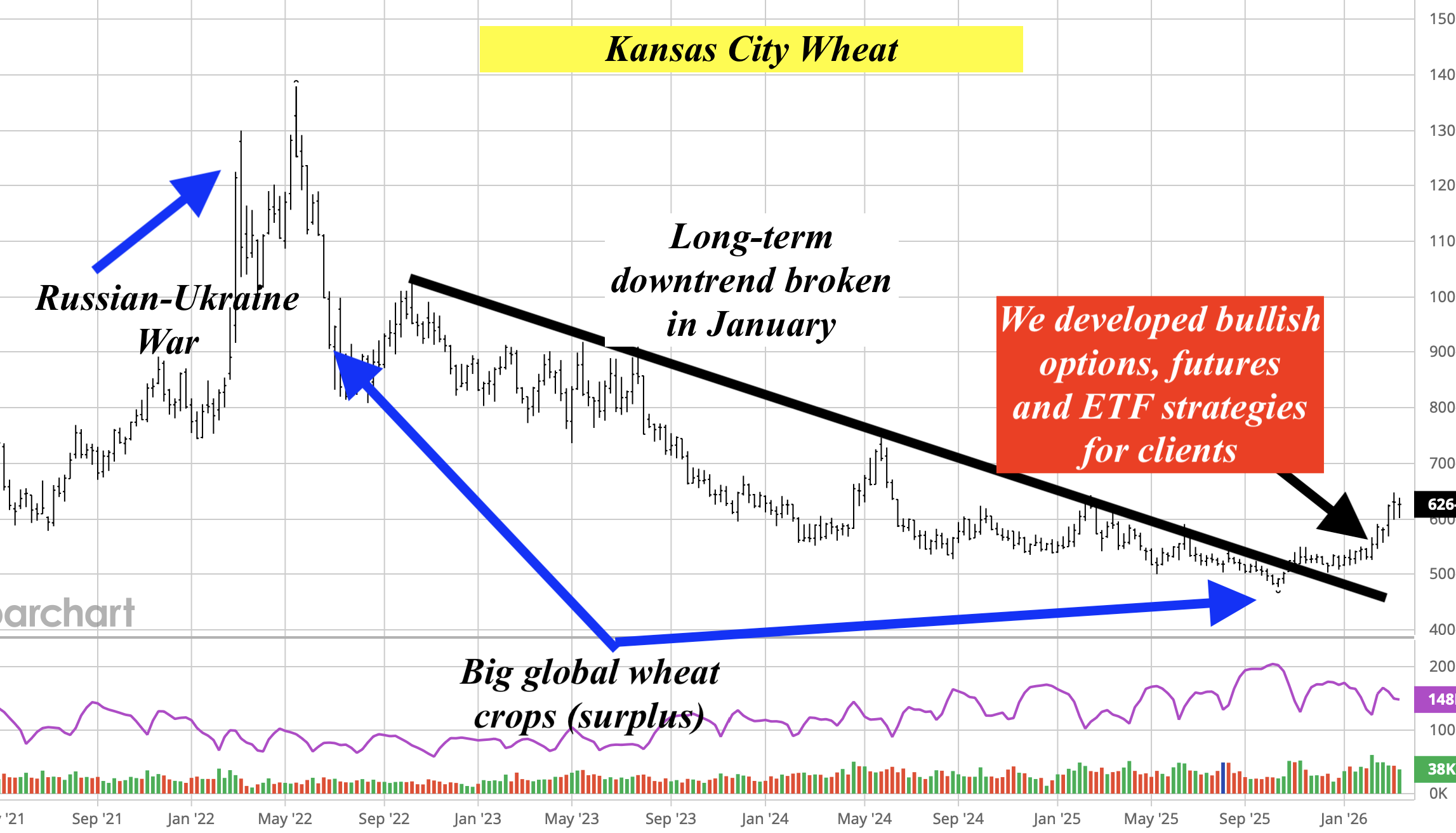
The key teleconnections that help us develop ETF, futures and option strategies for clients are: 1) A weakened La Niña; B) Lingering negative global atmospheric angular momentum (GLAAM) that can sometimes result in dryness for parts of the Midwest or the Plains; C) A major warm block (-WPO index) in northwestern Alaska that can bring occasional cold snaps to either the U.S. and/or Russia that could threaten wheat yields.
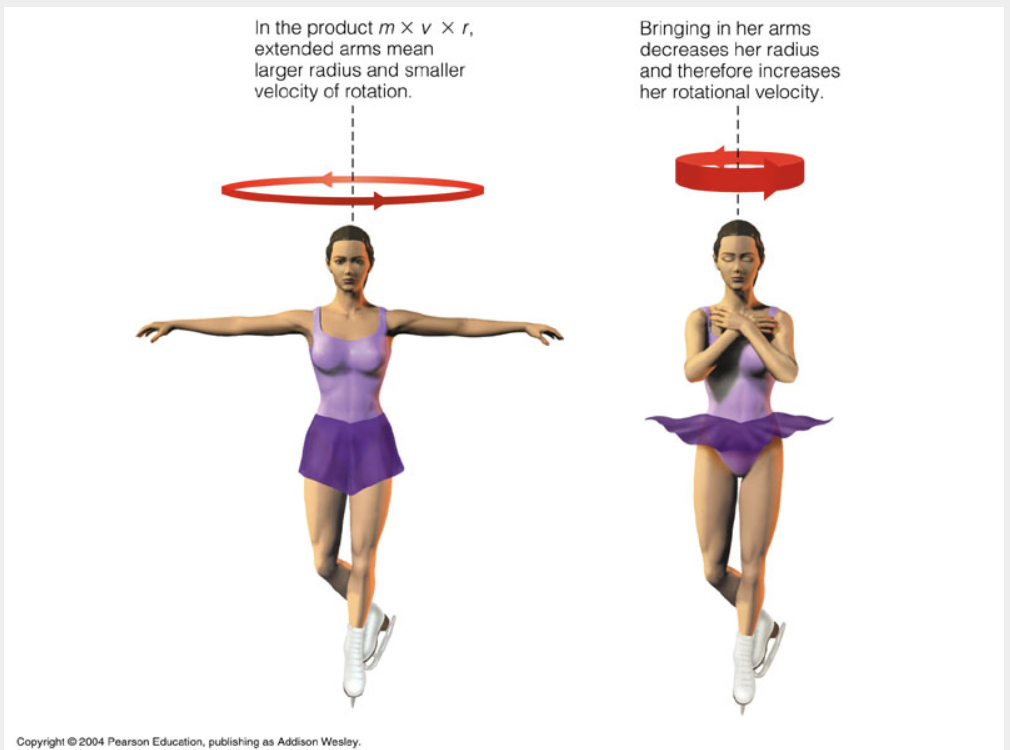
Source: Pearson Education
Global Atmospheric Angular Momentum (GLAAM) is a measure of the total rotation of the atmosphere relative to the Earth. When this index is negative, it indicates that the atmosphere is rotating more slowly (ice dancer on the left) than the Earth’s surface, typically resulting in easterly wind anomalies.
In the spring, a negative GLAAM phase often leads to dryness in the U.S. Great Plains wheat areas. The key point here is that even though La Niña has “officially” weakened to neutral, the atmosphere can still occasionally act as if La Niña is present when GLAAM is negative.
See this five minute video (below) that discusses the developing Plains drought and which factors we are watching.
Source: Jim Roemer & Google’s NOTEBOOK-LM
Other factors have influenced wheat prices, resulting in major volatility. They are:
The Middle East war and logistical issues in transporting wheat
The Russian war on Ukraine could lower Ukrainian wheat production
Recent heat stress to crops in India
The stronger U.S. dollar can sometimes hurt grain prices
This video addresses why feet of snow will affect the Northeast and New England for the next two weeks and why a cold mid-winter could last into March for the northern half to two-thirds of the Midwest and eastern U.S.
Click below to learn about A) The Polar Vortex; B) The positive SOI and weak La Niña signal; C) Why skiing in the Northeast and New England will have the best mid-late February conditions in a decade
WEATHER WEALTH SAMPLE CONTENT
HELPING YOU MAKE THE BEST INVESTMENT DECISIONS BASED ON THE WEATHER
We use cookies to ensure that we give you the best experience on our website. If you continue to use this site we will assume that you are happy with it.