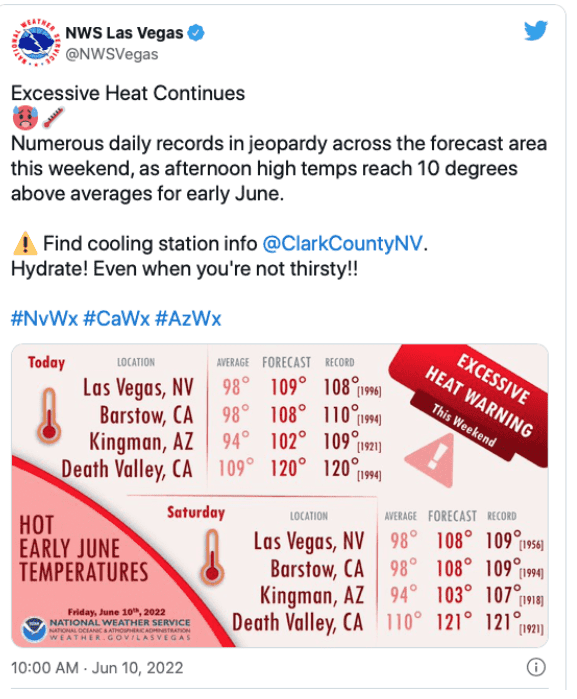
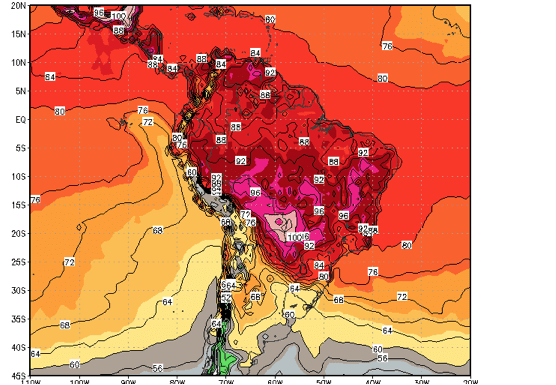
In the midst of a potential global recession, summertime weather will be important for many commodities from natural gas to grains and cotton. Currently, record U.S. western heat is creating massive power black outs, The accelerating drought and heat is a combination of both global warming and climate change and also La Niña
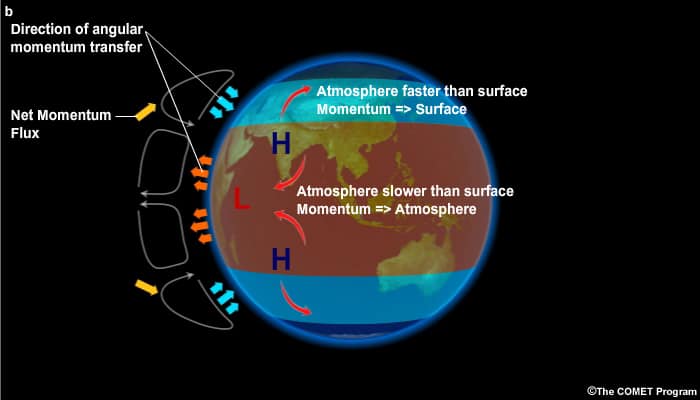
This video below discusses what Global Angular Momentum (GLAAM) and why negative GLAAM is indicative for a hot summer for much of key U.S. natural gas and grain areas as La Nina remains moderate until at least early summer. Atmospheric angular momentum (AAM), a measure of the rotation of the atmosphere around the Earth’s axis, is a useful quantity to investigate changes in the global atmospheric circulation. When there is negative GLAAM, there is a drag in the atmosphere along the equator and this can help maintain La Nina type conditions.
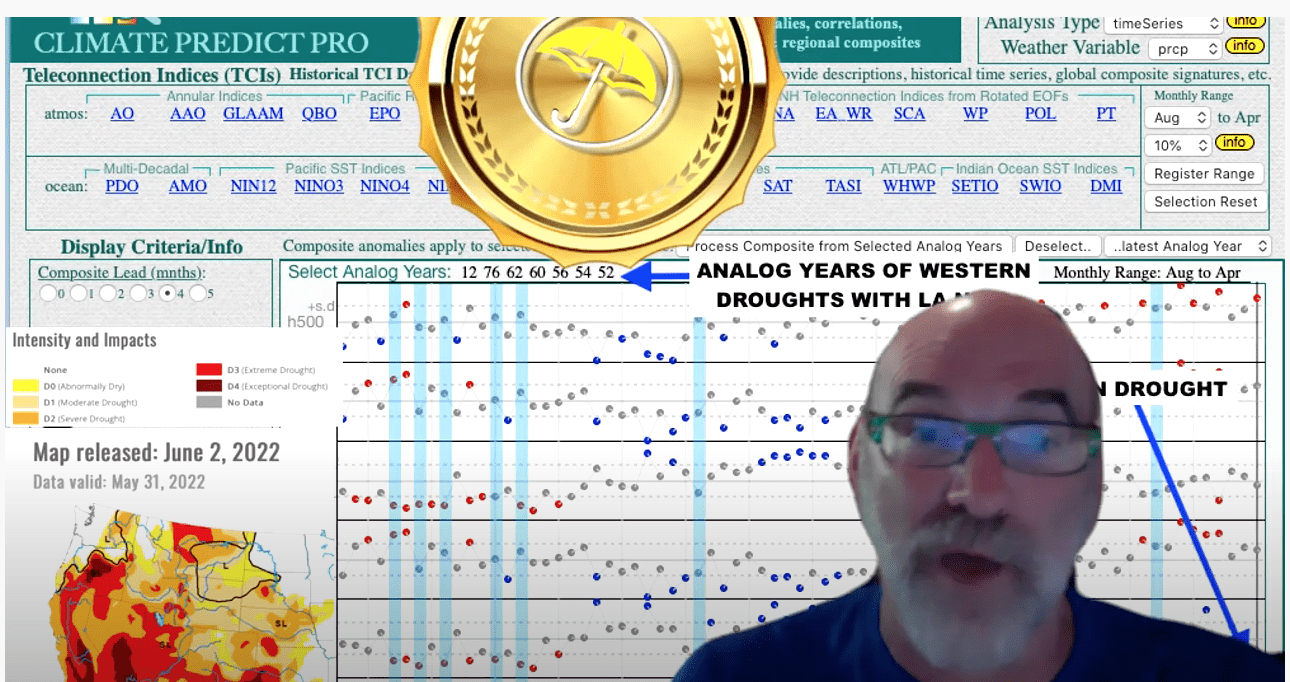
This is very unusual for there to be a third consecutive year of La Niña. How do historical western drought and June heat waves when combined with La Nina help us forecast summer weather? Again, this video explains.
Clkck on the baby above to find out about grains, commodity spreads and more
Please download your free issue of Weather Wealth (above). This free issues DOES NOT include Jim Roemer’s ETF or commodity futures and option trade ideas (reserved for clients only)
Click on the video above to find out more about grain market spreads and how weather affects them (please subscribe to my YouTube channel)
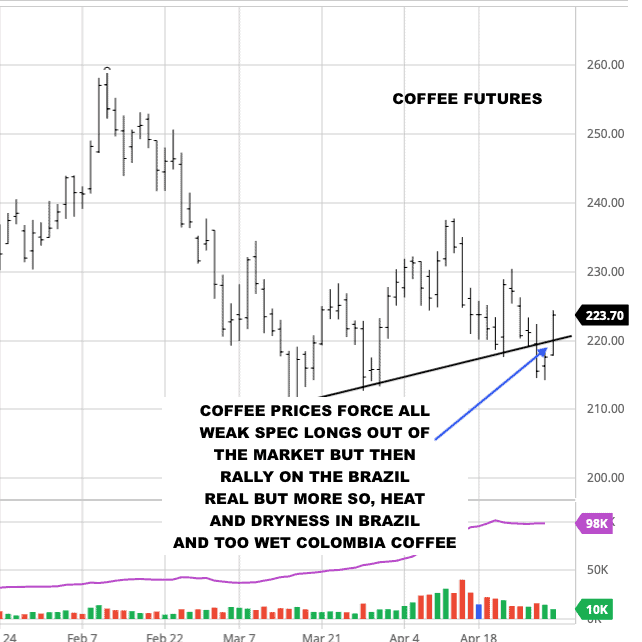
I had been in the bearish in coffee prices most of this winter (Brazil summer. My earlier sentiment was due not only to consumer demand worries from the Russian-Ukraine War and risidual concerns about COVID, but because I forecasted the northern Brazil drought to break, last October. Indeed crop prospects have improved for Brazil coffee following frosts and droughts last year.
I mentioned weeks ago to my Weather Wealth clients to sell call options when coffee prices were in the $2.30-$2.50 range. However, I alerted clients earlier this week to potential problems areas for both Colombia coffee and Brazil that might foster a rally again in coffee prices.
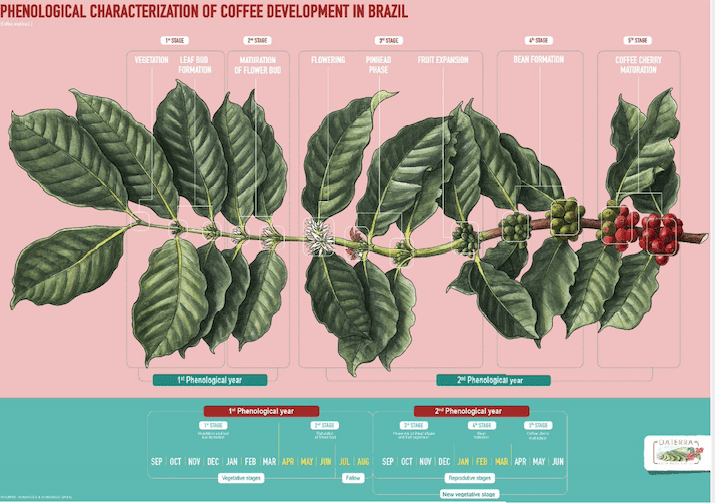
Here is a chart “Phenological Chartacterization Of Coffee Deveopment In Brazil” . Excellent October-December rainfall in Brazil aided the bloom and development stage of coffee. Presently, the coffee crop is maturing and “normally” dry weather is not a crop issue. However, it may be an issue this year. Temperatures for the month of April into May are well above normal that may cause some shrinking of the coffee beans, ahead of harvest.
We are in the “maturation stage” presently. Hence, weather later in May-July will be very important for the harvest.
The stronger U.S. dollar, caused by inflationary concerns and rising interest rates, helped to pressure coffee prices through support earlier this week. However, as is so often the case in commodities, “when everyone runs for the hills and is washed out”, that is often time to buy (on fear, not greed)
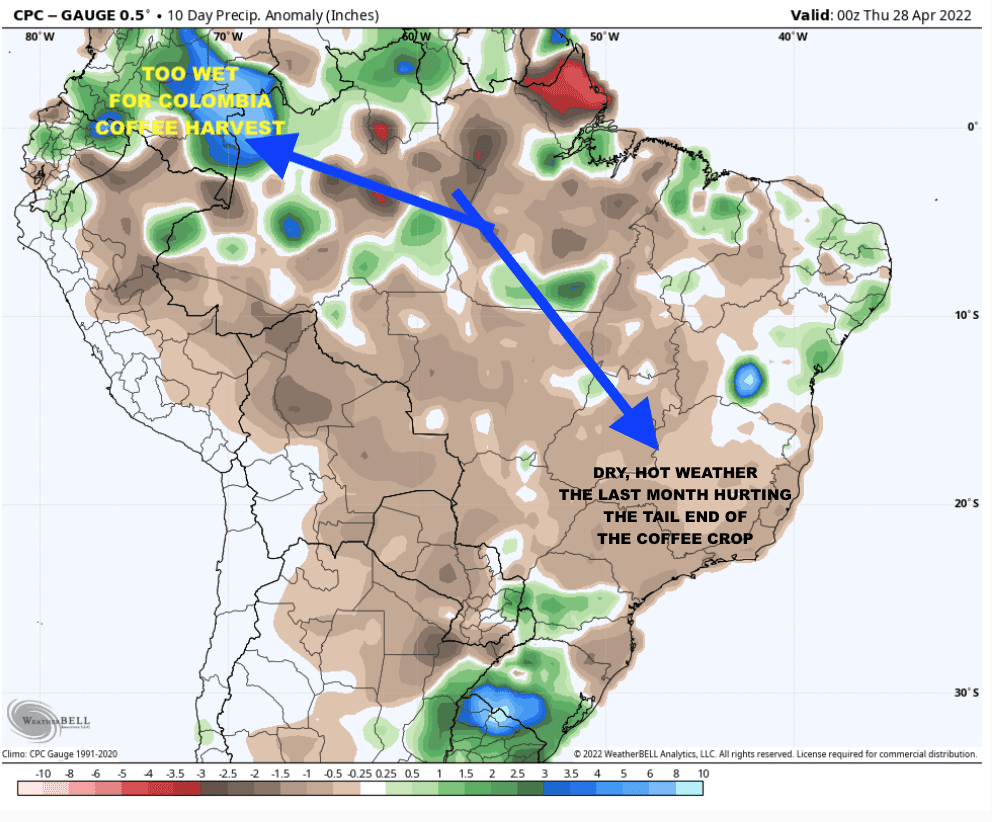
We can see below the dryness in Brazil and it being too wet for Colombia coffee. The last time this happened was during the La Nina of 2011-2012 when reduced crop estimates for Colombia helped coffee prices rally into June.
Will this happen again and could there be a frost scare for Brazil in the coming months? My next issue of Climatelligence will discuss more about coffee weather in the weeks and months to come and how to trade this.
We have seen a stellar rally in corn and wheat futures early this week almost entirely inspired by the weather. Following a huge move up in grains this winter on South American weather problems, inflationary concerns, and of course the Russian-Ukraine war, spring weather is now a key factor in the markets.
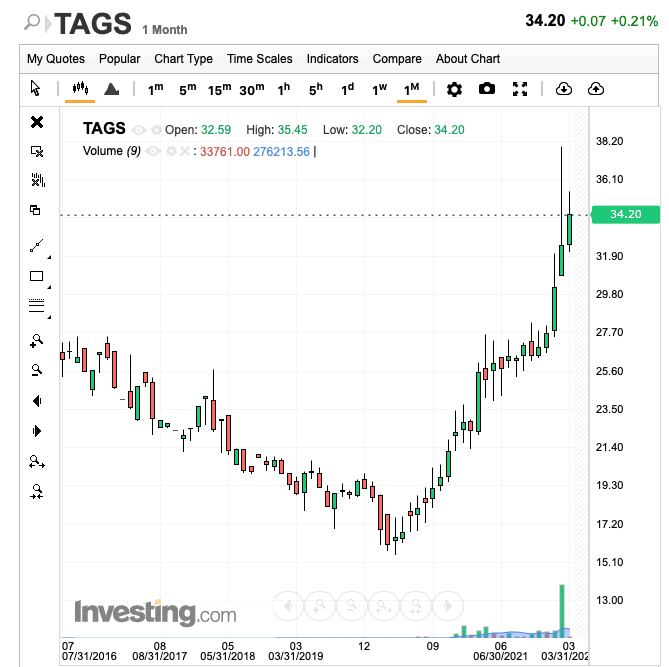
Look at all Agriculture-grain ETF has it has soared on these weather problems
The first maps show that the 2nd Brazil corn crop was being affected by more hot, dry weather during this critical time.
Adding to the new bullish flavor in ag commodities again is the fact that La Nina is actually not weakening. This will set the stage up for more volatile spring and summer weather. Often, the 2nd year of a La Nina could be a wet, cool one for the Midwest grain belt and indeed this is happening.
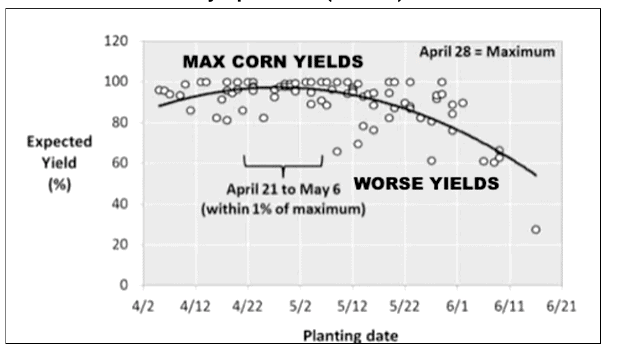
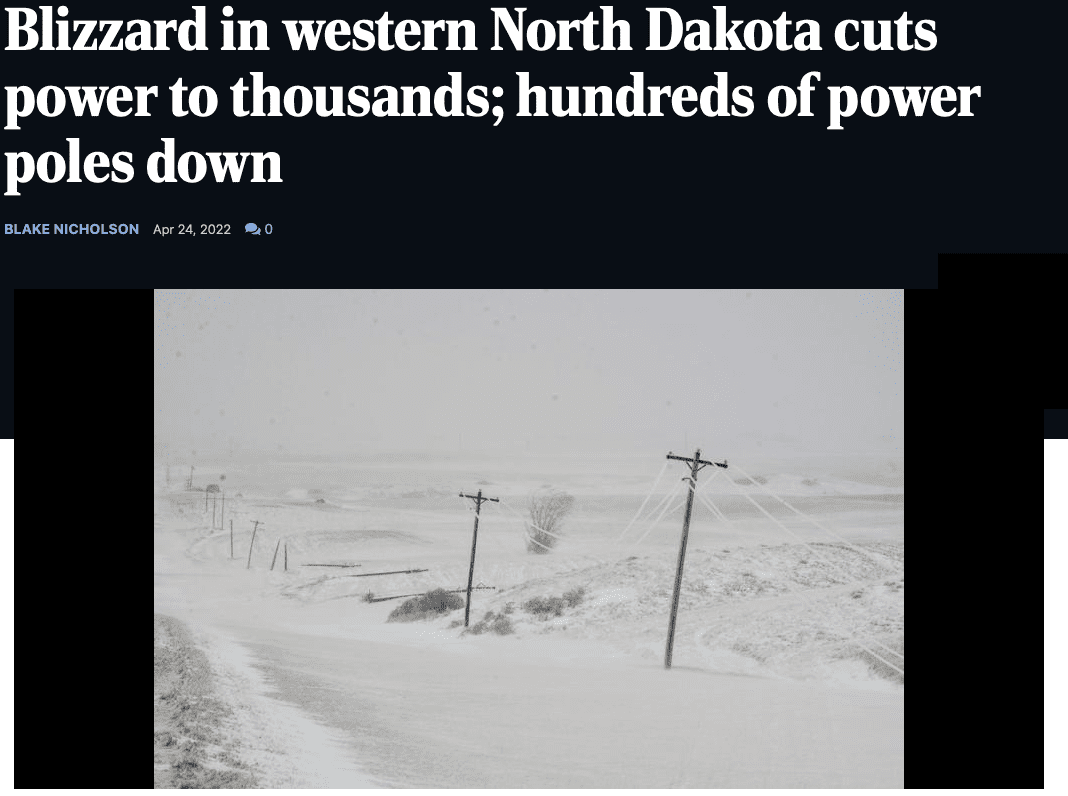
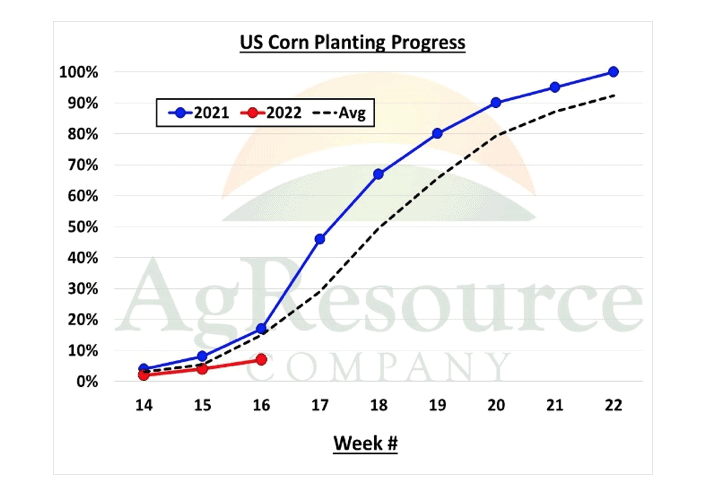
Historic April blizzards in the northern Plains will delay seeing spring wheat and corn planting.
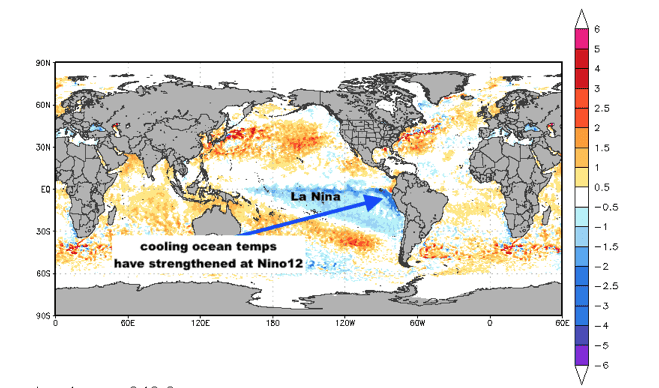
We are seeing the eastern Pacific region ocean temperatures cool at what we call Nino12. This is quite unusual this time of the year to see this cooling. This means that La Nina is not weakening, as I pointed out to clients a few weeks ago.
”
My in-house weather program climatepredict.com reveals (above) what usually happens during the month of May when cooling occurs at Nino12.
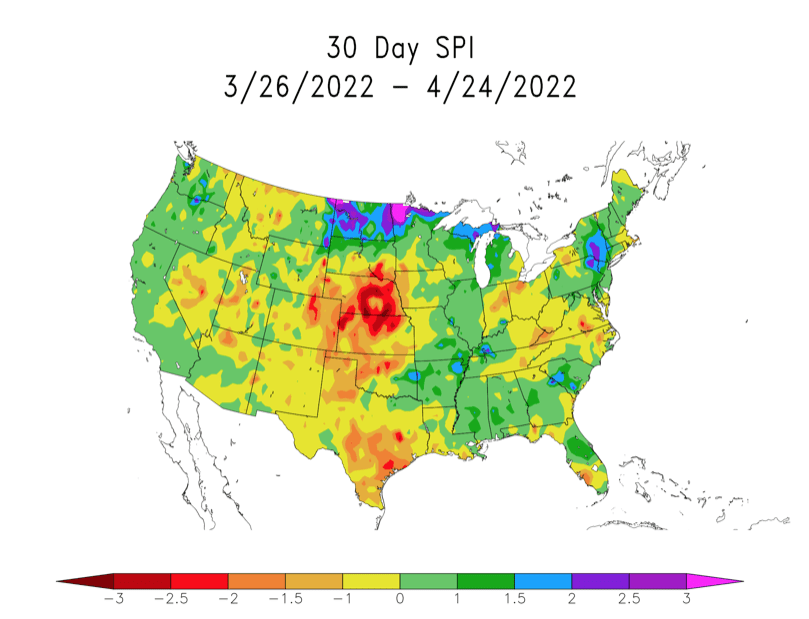
The map below shows rainfall in the last month. Notice how it has been too wet in the northern Plains (blue) as well as parts of the central and southern corn belt. This severe weather season is one of the worst in years. There will also likely be weather problems for cotton as well.
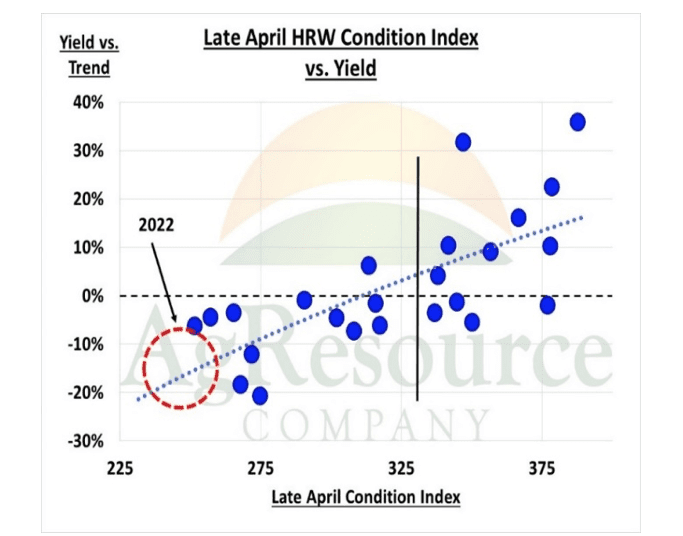
While U.S. corn plantings will continue to be delayed, the U.S. hard-red wheat crop is the worst in years and will continue to fall in ratings based on my forecast.
Click on the video above to hear how we told our Weather Wealth clients last Sunday about the potential explosion in wheat prices again, this time not on the Russian-Ukraine war but on global weather problems.
HELPING YOU MAKE THE BEST INVESTMENT DECISIONS BASED ON THE WEATHER
We use cookies to ensure that we give you the best experience on our website. If you continue to use this site we will assume that you are happy with it.