

Image Source: Best Weather Newsletter
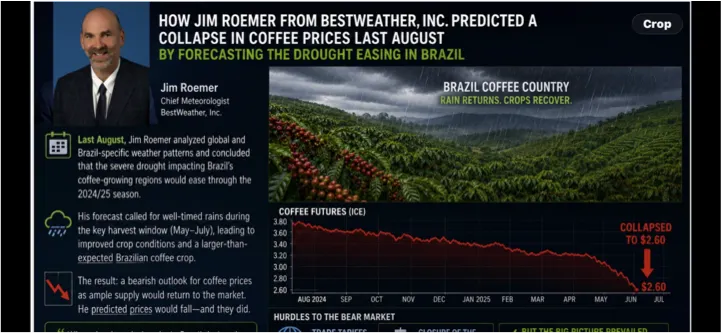
The illustration above reflects Mr. Roemer’s view in October of 2025 that Brazil’s coffee production would rebound and that we would enter a longer-term bear market.
Following back-to-back droughts and frost scares from 2023-2024 with surging coffee and cocoa prices, the coffee market fell back to earth. While some folks have felt that Brazil’s record crop could mean prices below $2 per pound, we have disagreed. These are the same traders who, at $3.50/lb. last year, were still bullish. They did not anticipate that a weak La Niña at the time would increase (not decrease) global coffee supplies.
Trade tariffs (the US war on Iran aside) had created incredible market volatility, and when Brazil’s record crop hit the market, prices fell below $2.50 a couple of weeks ago. Since that time, our view has been that disease issues from too much rain would hit key areas of Brazil. This caused us to recommend some cautiously bullish trade strategies for our subscribers. Coffee prices have since rallied 10% in the last few weeks.
To find out more about our global coffee weather forecast and market outlook, please upgrade below. (If you are already a Climatelligence subscriber, you can access our full report here.
More wet weather is coming for Brazil’s coffee crop – How El Niño may affect prices
Brazil’s coffee shifted from record-crop optimism to supply-risk concern.
Early on, traders expected a big 2025/26 Brazilian crop. This was because Arabica was in a favorable biennial cycle, and Robusta output was looking strong. That raised the hopes that global coffee supplies would loosen.
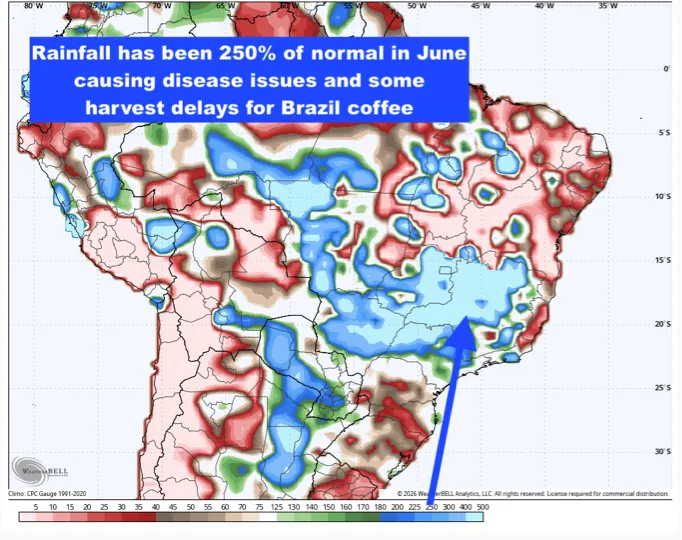
By June, the worry changed from too little rain to too much rain. Wet, cooler weather slowed harvesting, delayed ripening, limited fieldwork, and raised fears about bean quality.
We alerted our subscribers to this two weeks ago… and that it was likely that “the lows were in” for coffee prices.
Map Source: WeatherBELL
The rain also increased concern about fungal disease and pest pressure, including leaf rust, cercospora, and coffee borer issues.
Because global coffee inventories were already tight, even a modest threat to Brazil’s harvest triggered a strong market reaction.
The core narrative became:
→ big crop expected
→ weather damage trims potential
→ June rains threaten harvest pace and quality
→ prices rise on renewed supply fears.
We looked for a return of wet weather for the remainder of June to cause additional new concerns for Brazilian coffee.
So… what about a longer view of coffee’s price? Well, just looking at El Niño events below, we can see how prices tend to go higher. Although Jim sees no frost potential for Brazil, a return of wet weather means prices should trend higher heading into July.
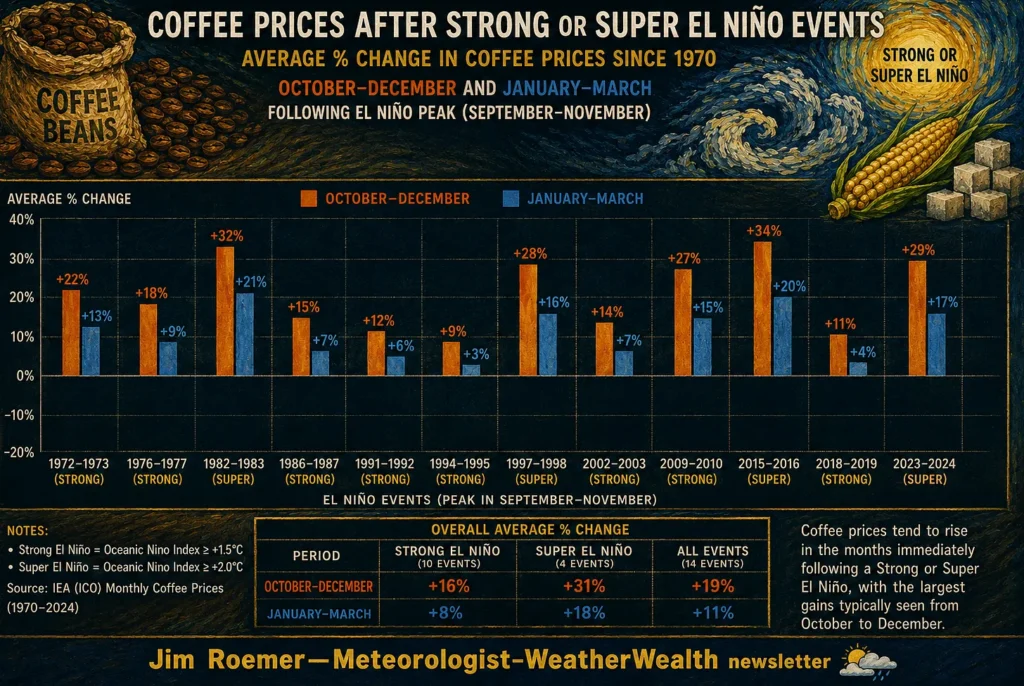
Image Source: WeatherWealth Newsletter
We appreciate your interest and look forward to helping you gain a better understanding of the powerful connection between weather and global commodity markets.
Thanks for your consideration in joining our followers.
Jim Roemer, Scott Mathews, and the Best Weather Team
Mr. Roemer owns Best Weather Inc., offering weather-related blogs for commodity traders and farmers. He is also a co-founder of Climate Predict, a detailed long-range global weather forecast tool. As one of the first meteorologists to become an NFA-registered Commodity Trading Advisor, he has worked with major hedge funds, Midwest farmers, and individual traders for over 35 years. With a special emphasis on interpreting market psychology, coupled with his short and long-term trend forecasting in grains, softs, and the energy markets, he commands a unique standing among advisors in the commodity risk management industry.
