

El Niño and the wars are creating inflationary concerns in some commodity markets.
by Scott Mathews
Editor-in-Chief and Co-Producer of Climatelligence
- July 24, 2026, Source: Jim Roemer – Meteorologist – Commodity Trading Advisor – Principal, Best Weather Inc. & Climate Predict – Publisher, Weather Wealth Newsletter and Co-Producer of Climatelligence
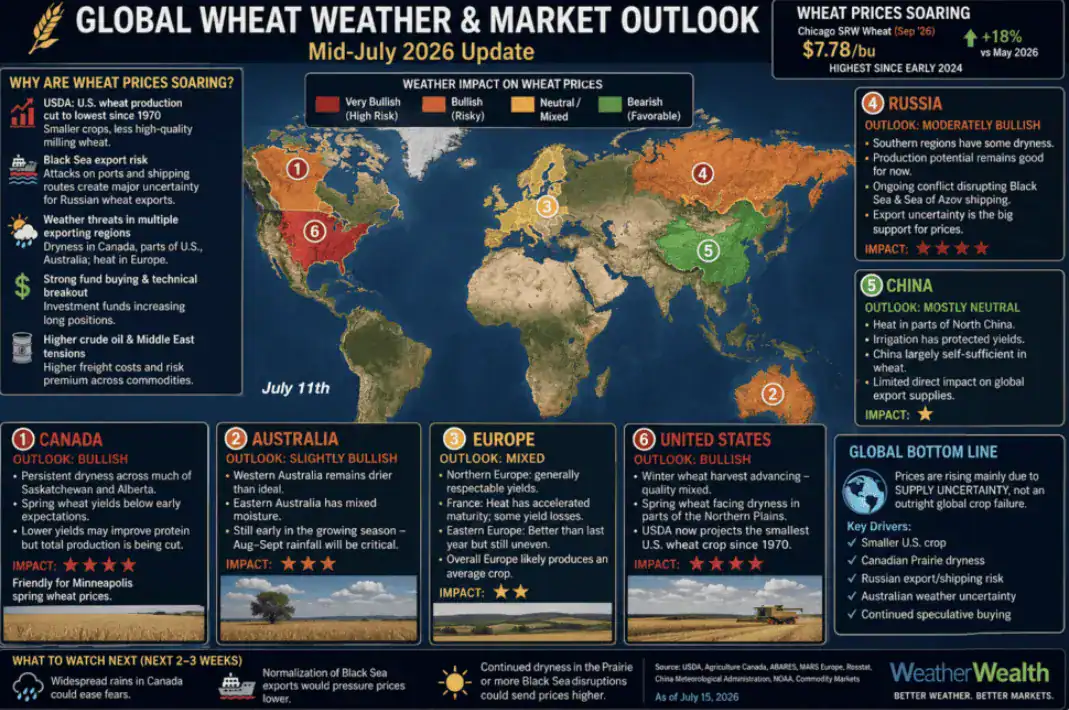
The first bull market wheat traders have seen in years.

El Niño and the wars are creating inflationary concerns in some commodity markets. Below is a description of why wheat’s price has soared over the last few weeks.
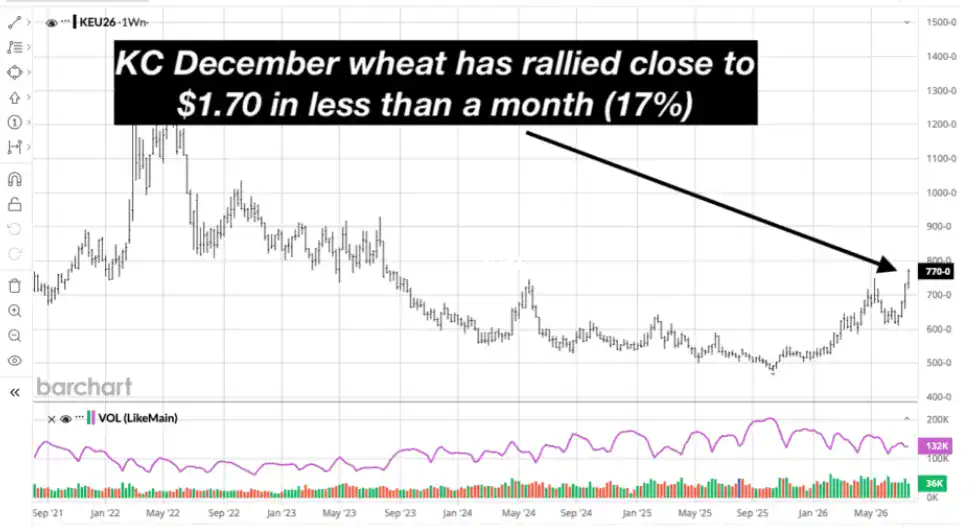
Image Source: Barchart.com with commentary by Best Weather, Inc.
Question:
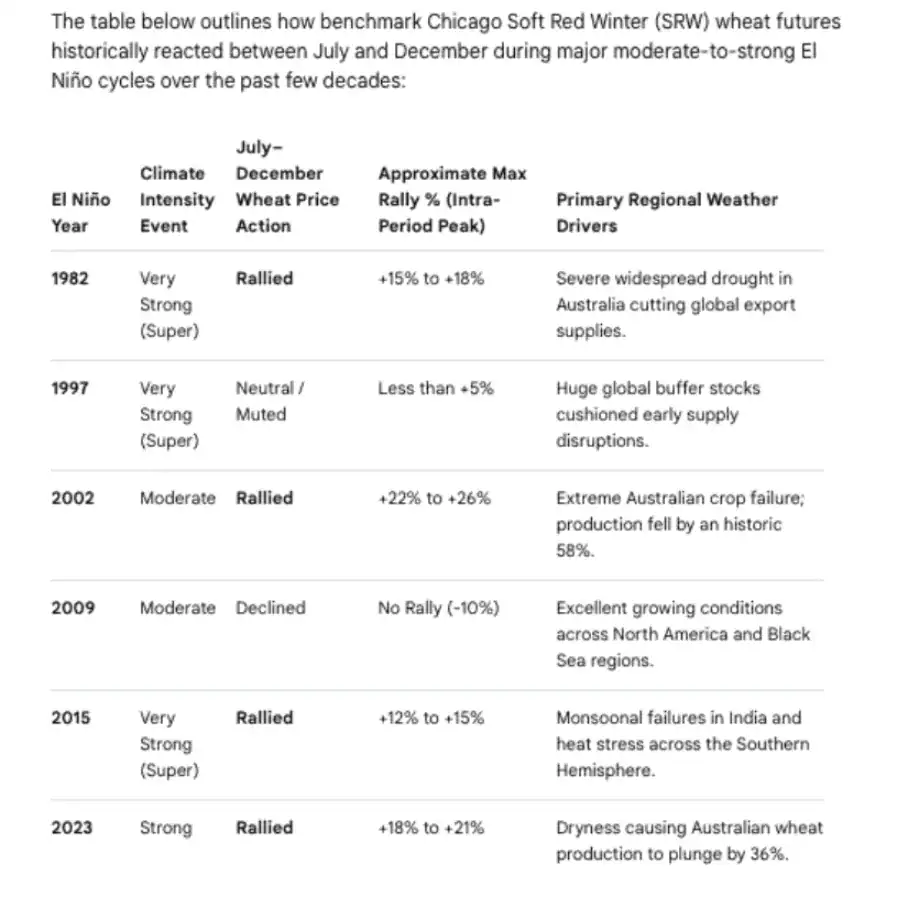
How often has the price of wheat futures rallied from July through December, during moderate or strong El Niño events?
Answer:
About 70% of the time, wheat prices have rallied by an average of 14%.
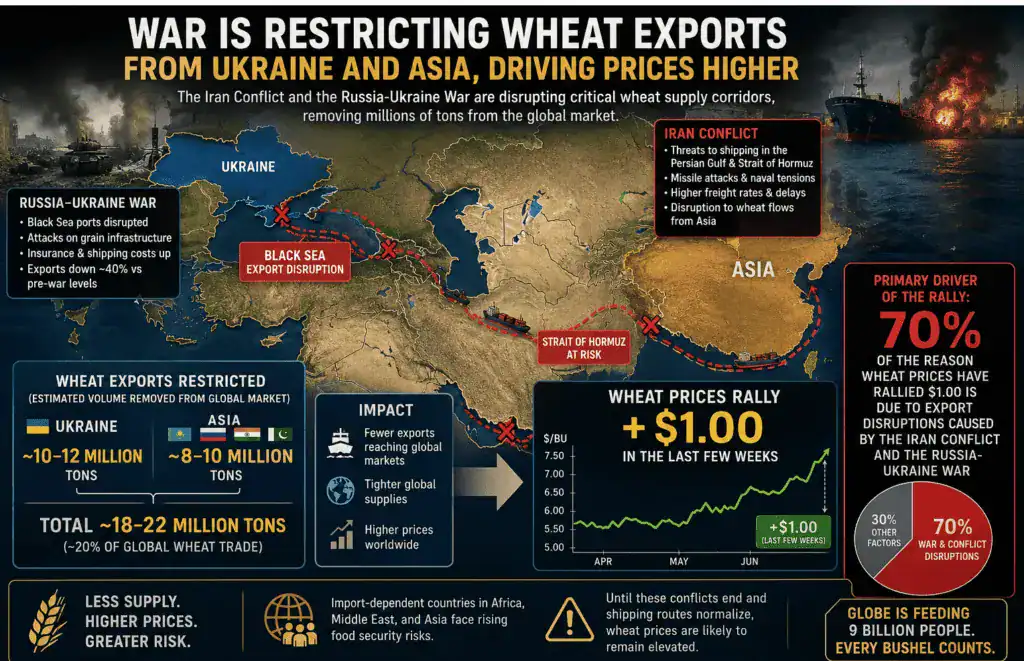
What is driving THIS bull market?
We know WHO is leading the charge…

… but WHY* ???
*The wars overseas and the lack of exports coming out of the Middle East and Ukraine
Big time heat in Europe and the northern Plains spring wheat areas: While the main growth stages of wheat are now over, reductions in both wheat crops (France and the Dakotas) are still occurring due to these extreme temperatures.
Dryness in Australia’s west, El Niño, and a positive Indian Ocean Dipole (IOD) are impeding the wheat crop. While much of New South Wales and Queensland in eastern regions received important spring rains for planting, the western areas are at risk for crop losses.
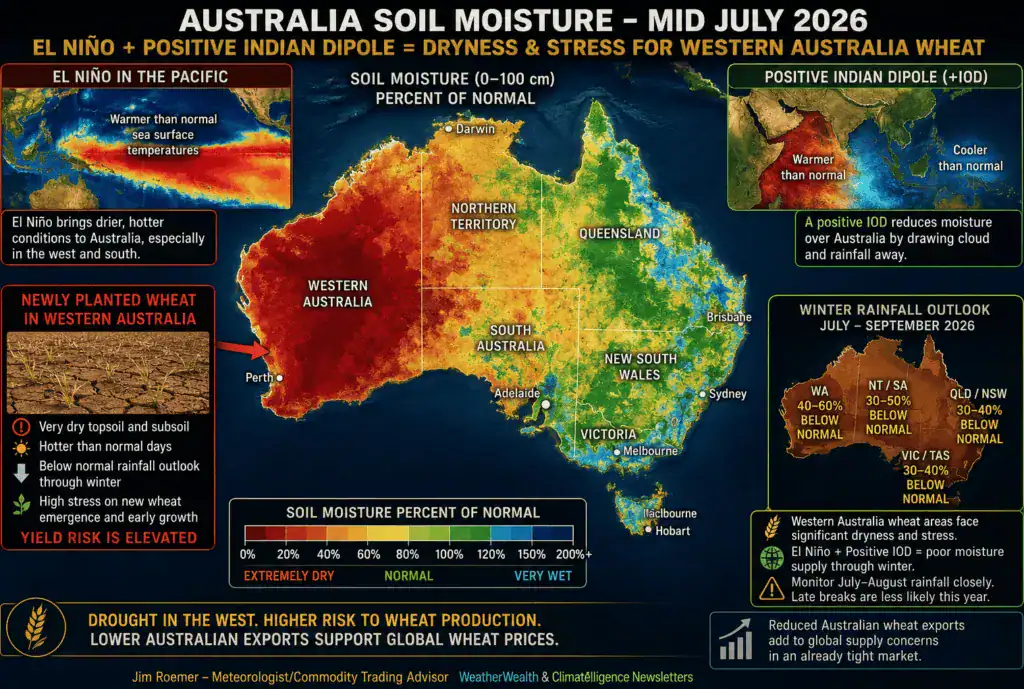
The lowest US wheat crop since the early 1960s: The drought in the Plains last spring and lower acreage are creating a squeeze in the market. Millers and food processors in the United States are scrambling.
SO WHAT SHOULD YOU DO IN THE WHEAT MARKET? Should you buy the Wheat ETF (WEAT), outright futures, selected calendar spreads, or options?
Jim Roemer’s answer (for Climatelligence’s paid subscribers) is below:
I do not like buying markets that are partly related to war. Plus, when everyone jumps into a market, that is often the time to sell. I have advised global clients in my popular premium WeatherWealth newsletter to hedge some of their 2026-27 wheat crop at these prices.
Most recently, I felt that coffee prices would tank, and at this point, I advised some traders who sold call options to take nice profits and go on the sidelines.
If one really wants to trade wheat, the best suggestion is to wait for a break of at least 10-20 cents and then potentially buy the ETF (WEAT) and to risk only 5%.
We appreciate your interest and look forward to helping you gain a better understanding of the powerful connection between weather and global commodity markets.
Thanks for your consideration in joining our followers.
Jim Roemer, Scott Mathews, and the Best Weather Team
Mr. Roemer owns Best Weather Inc., offering weather-related blogs for commodity traders and farmers. He is also a co-founder of Climate Predict, a detailed long-range global weather forecast tool. As one of the first meteorologists to become an NFA-registered Commodity Trading Advisor, he has worked with major hedge funds, Midwest farmers, and individual traders for over 35 years. With a special emphasis on interpreting market psychology, coupled with his short and long-term trend forecasting in grains, softs, and the energy markets, he commands a unique standing among advisors in the commodity risk management industry.
