In this report:
Click on recent trade ideas
Video: Introduction to El Niño
The first effects of a developing El Niño: Drought breaking in Texas and the deep south, with flooding in some areas
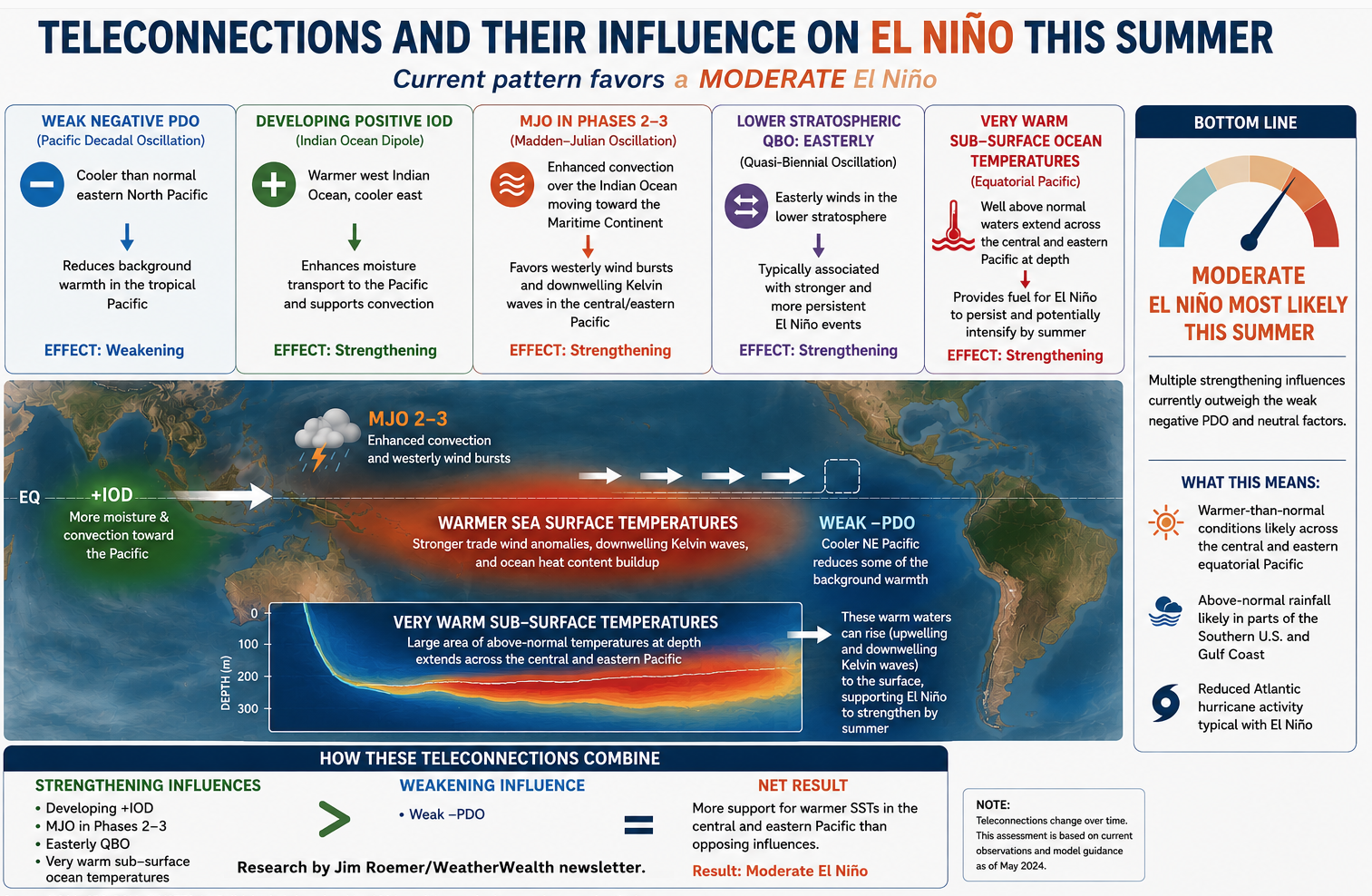
Various teleconnections can affect the strength and size of El Niño
A general view of El Niño and commodity market impacts
Recent Trade Ideas
Click on the image

Video about El Niño
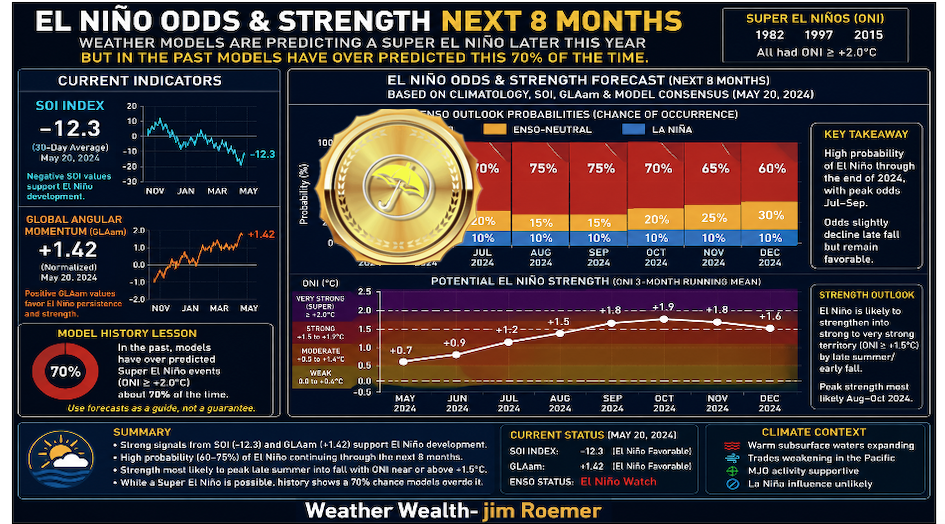
This video does not give any specific trade ideas, but discusses how El Niño forms and why some forecasters are predicting a ” Super El Niño.”
The verdict is still out, however, and I will be doing research on this in the coming weeks and months.
The effects of lower crude oil prices and a potential end to the Iran War will greatly affect commodity prices early this week. The stock market made new highs. However, Iran has not agreed 100% to a deal.
CLICK ON MY VIDEO ABOVE
The first effects of a developing El Nino? Flooding rains and drought breaking in the deep southern U.S.
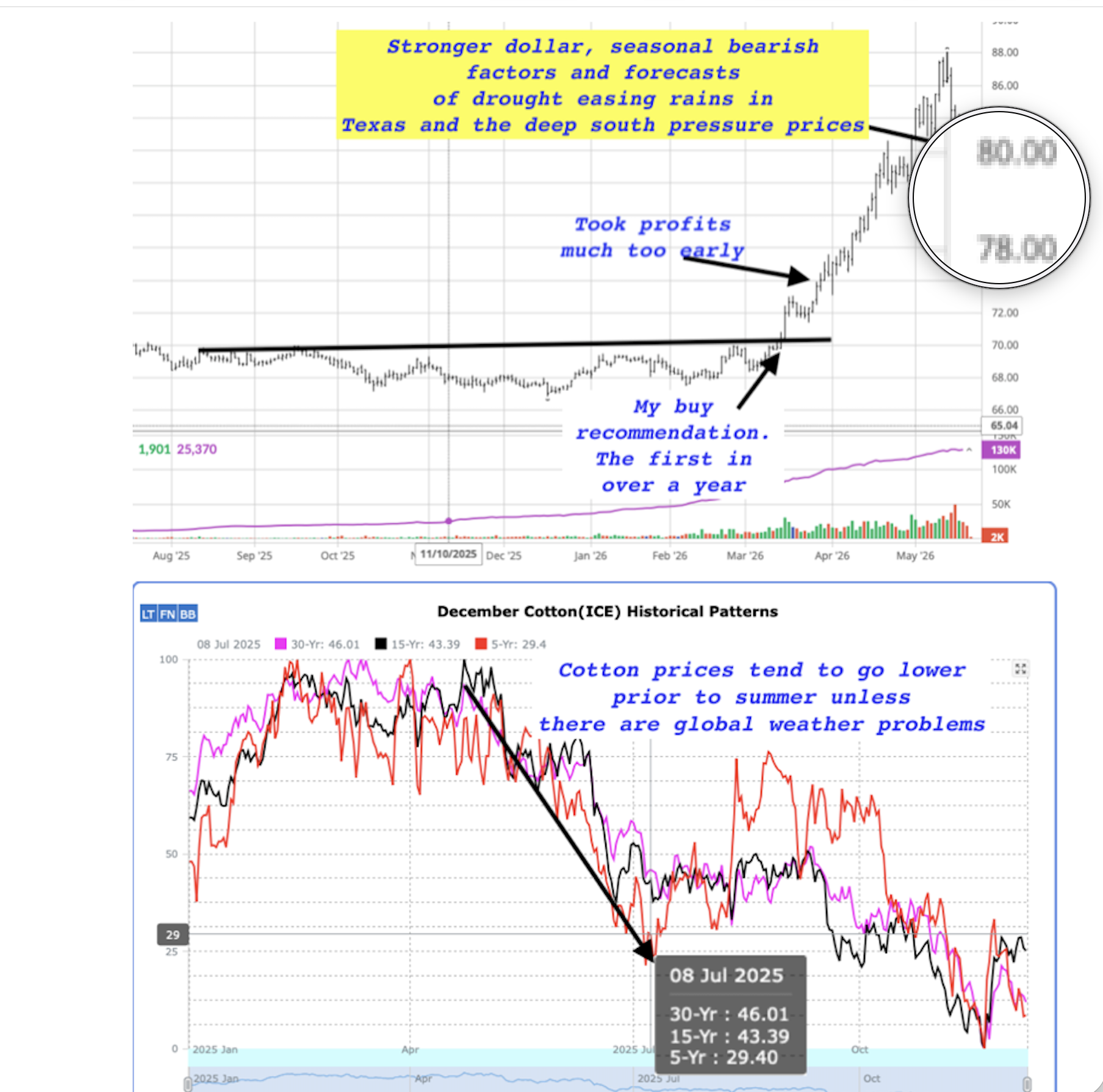
U.S. cotton drought to break
I mentioned some 400 points higher than this, that I was bearish on cotton as I saw the drought ease for key Texas and Delta cotton growing areas. This is typical of a developing El Niño. However, I am not sure of some flooding in the deep south could eventually rally cotton prices back, as well as strong demand. Otherwise, we had a clear break below support last week prior to my spider going bearish.
I mentioned this a week ago and cotton prices have collapsed
Flooding in the deep south may interfere with the early wheat harvest and some soybean planting
Notice rainfall this week could exceed 3-5″ in the deep south, including Texas. While seasonally, wheat prices go lower into harvest and much of the severe Plains (post-La Nina) drought may have been factored into wheat prices, these heavy rains might cause wheat prices to rally at some point.
In other words, some potential early wheat harvesting concerns and quality problems from too much rain in some areas. The wheat market is a bit confusing because global crop weather in Europe, Australia, and Russia is generally improving.
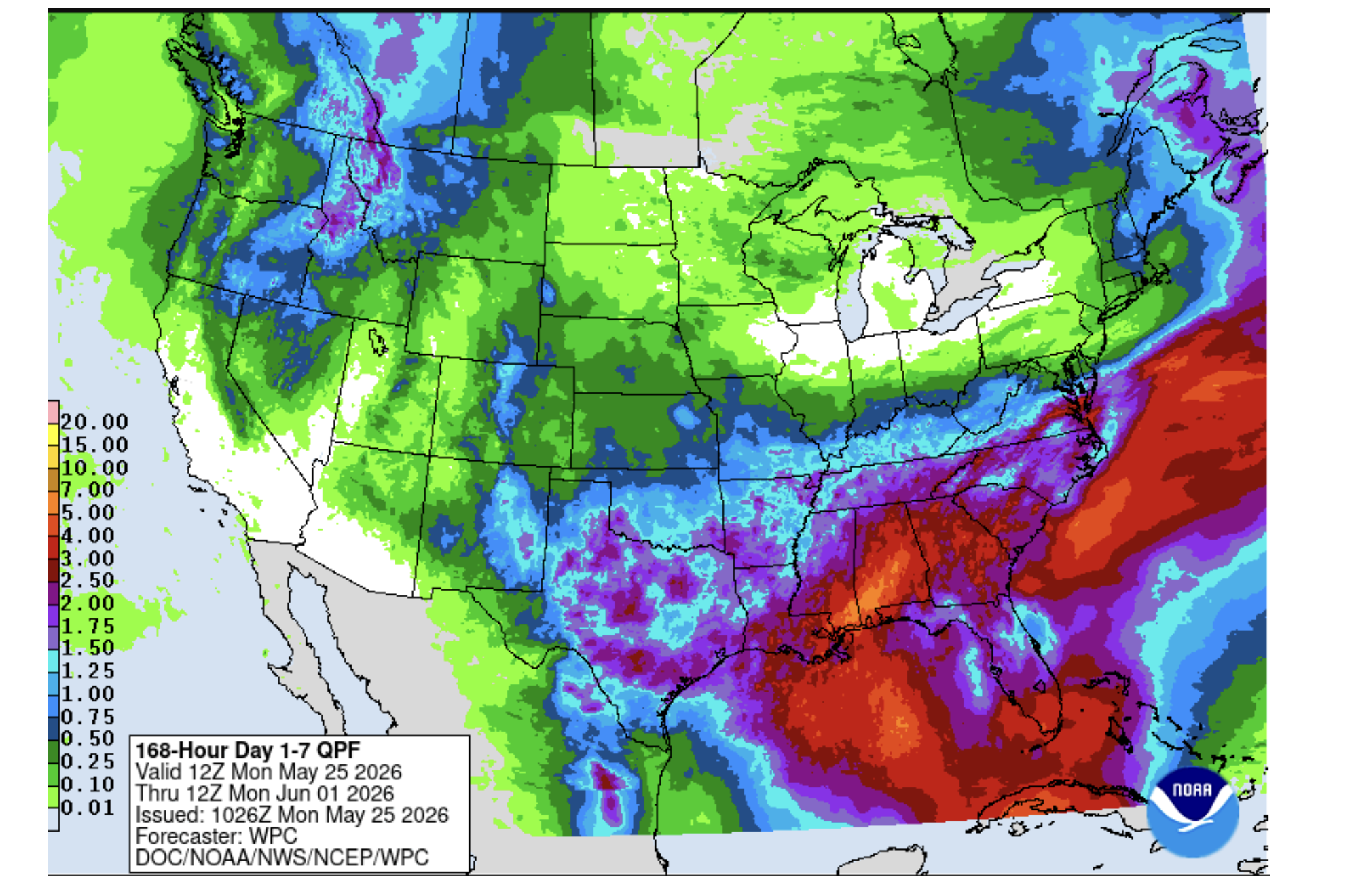
Rainfall in inches this week: Typical of a developing El Niño and too late to help the Plains wheat crop. This rain could cause some pre-harvest concerns for wheat in the Deep South and prevent prices from falling much further.
Improving the weather for Australian grain areas for planting
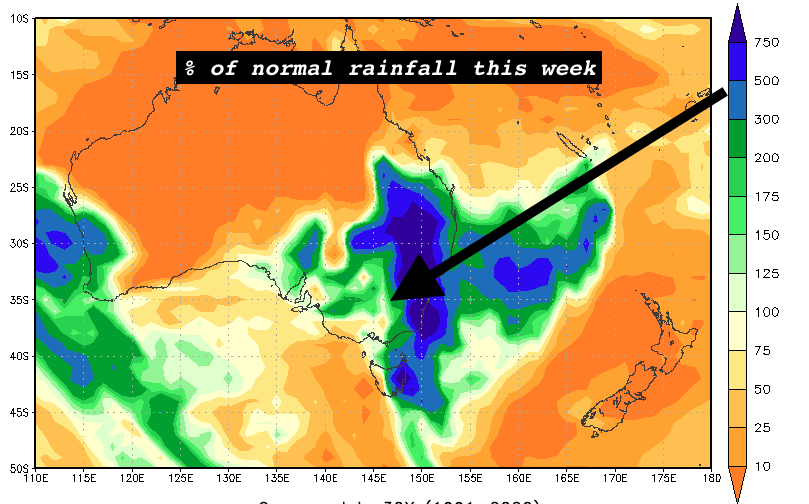
Look how models changed for very important rains for key Australian grain areas this week and possibly as we head deeper into June. I mentioned this two weeks ago. A weak El Niño this time of the year with a positive Indian Dipole usually brings better late May and June rainfall patterns for Australia. However, a strong El Niño later this year will likely cause some problems
Various teleconnections can affect the strength and size of El Niño
While Greek to many of you, it is not just Sea Surface Temperatures in the Pacific that influence El Niño, but some of these teleconnections. I will discuss this more in the days and weeks ahead.
Right now, by the North American summer, a moderate El Niño is likely, in my opinion. Will it be “Super” by the fall? Stay tuned
A general view of El Niño and commodity market impacts
You can print the table I created below.
This table is not set in stone. However, I pride myself on being able to “second-guess weather models and understand the psychology of commodity trading.”
Currently, I am trying to gauge the psychology of traders focusing on El Niño versus current global crop conditions.
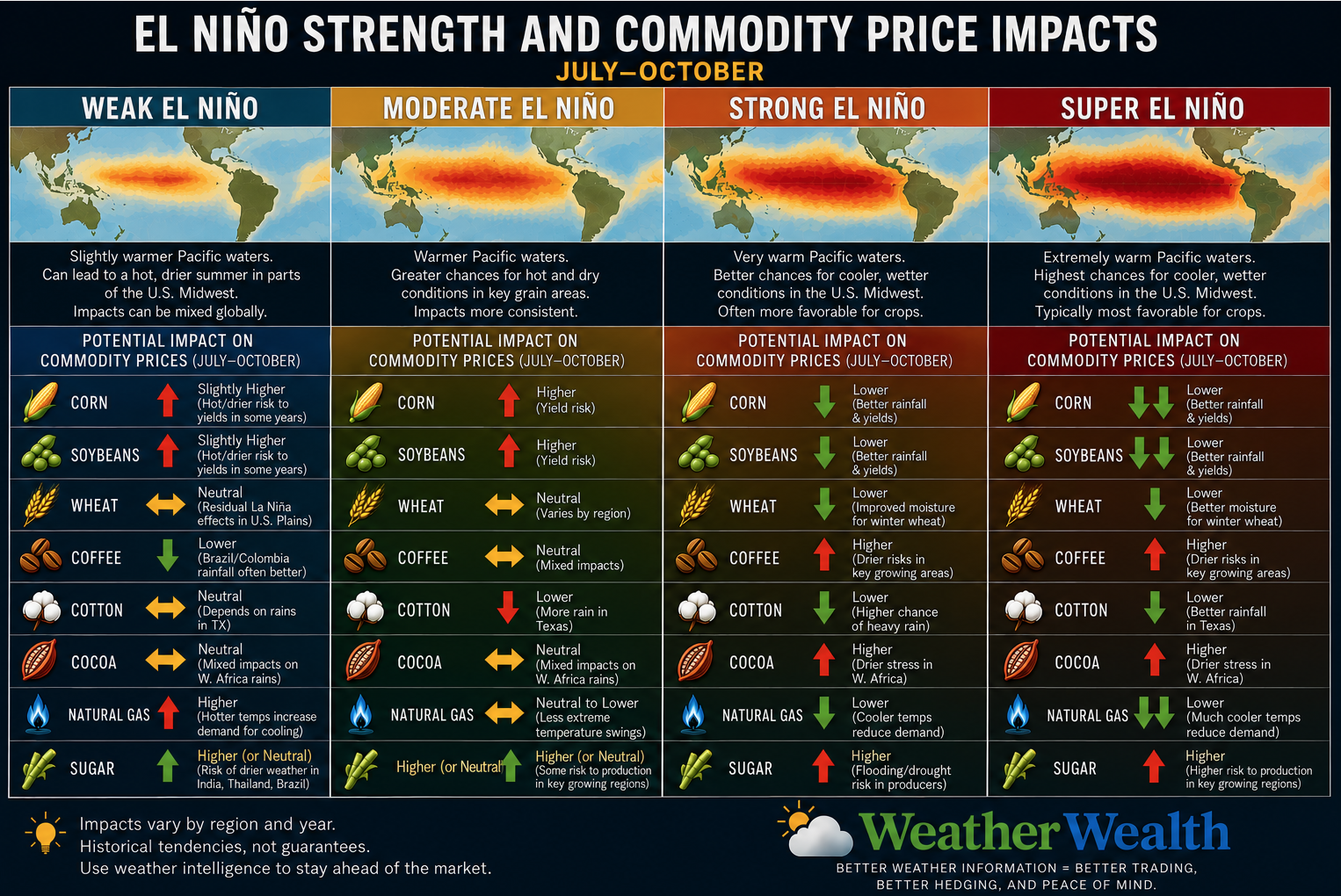
For example, while there are no immediate major problems for sugar production areas, sugar prices have rallied 5-10% the last few weeks on a “what if ” situation of El Niño and the rally in crude oil prices. I would expect that sugar prices may slide a bit, given lower crude prices currently, until more is known about the 2026-27 crops.
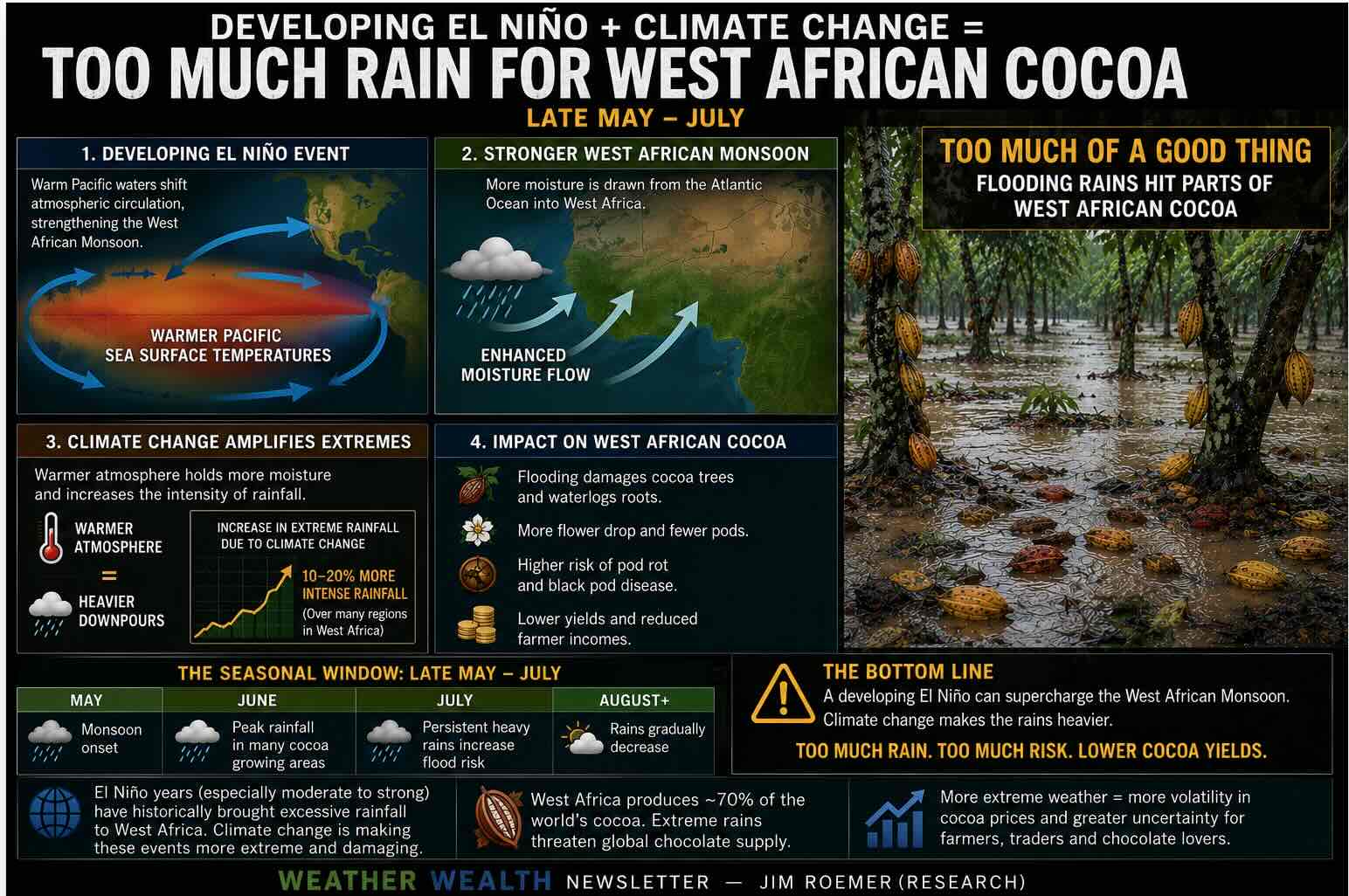
Another example is cocoa. Three weeks ago, I put out a buy recommendation in cocoa based on the “psychology” of El Niño coming. My timing was perfect as we rallied 20% in less than a week. Near the highs around $4500, I immediately said, “Take profits if you were long.” The reason, late May and June weather conditions are improving for West Africa. I do not know how low prices may go as we had a heck of a sell-off, but I want to see “actual” weather problems develop for West African cocoa crops before recommending any new high-confidence buy. It is possible that heavy rains in West Africa may be too much of a good thing and cause some crop concerns. I am cautiously bullish again cocoa longer term.
If El Niño becomes strong by July, ideal pollinating weather for corn will ensue and new crop December corn will fall below $4.00. Right now, the U.S. corn crop is in pretty good condition, and I will be monitoring dryness in the far north and western belt. If El Niño is weak to moderate, some potential Midwest heat and dryness could develop later in June and July. Stay tuned.
La Niña events usually create the greatest bull markets in wheat, but there are exceptions. Several strong El Niño events created major global crop problems in Australia, Argentina and China. For now, while wheat prices are falling on less Iran war tensions and harvest pressure coming up, some dryness and heat in Western Europe, combined with too much rain in the deep southern U.S. is typical of a developing El Niño. Some (not all) El Niño events can bring too much rain for the U.S. wheat harvest. The result may still be sideways, confusing action for the wheat market for now. I would not press the short side of the wheat market on the recent 20-30¢ sell off.
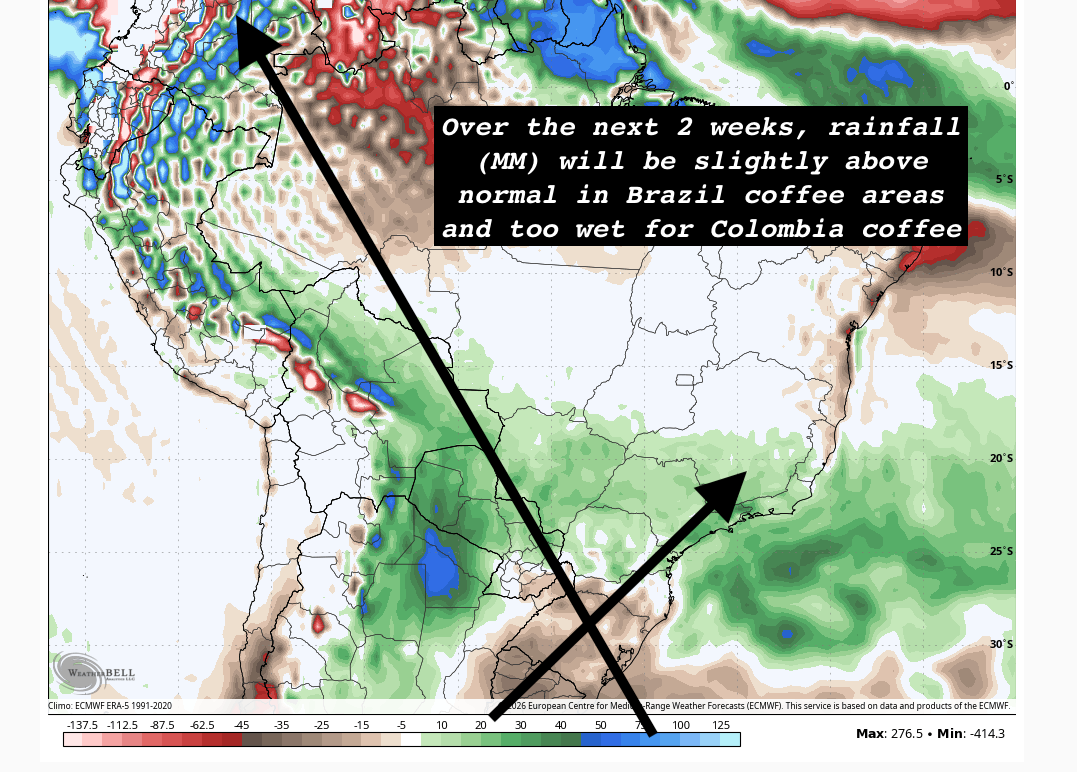
There has been talk about lower Brazilian coffee production and El Niño. However, this would NOT be until later this year. A strong El Niño would end the bear market I predicted in coffee from last August to October. Coffee prices have fallen 30% since my bearish recommendations.
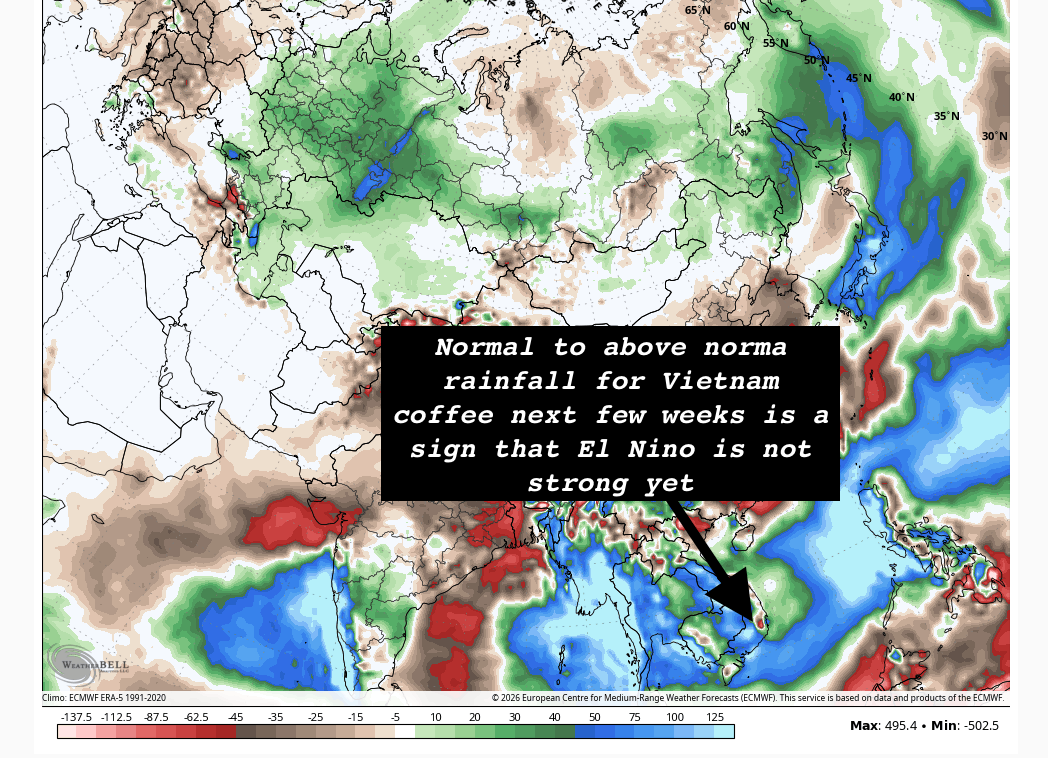
There is chatter that the Vietnam coffee crop is being hurt by dry weather–often a sign of El Niño. However, I think it is too early to write off the Vietnamese coffee crop. Usually, El Niño has to be strong to greatly reduce the Vietnam crop. That may not happen till later on this year.
My main concern about the global coffee market is a lower Colombian crop. Usually, this time of the year, El Niño reduces potential crop problems for Colombia cofffee. However, that is not happening. It may be too wet. Hence, I am confused for the moment what to think about the coffee market and had clients take more nice profits again early last week in short positions (mostly long put options or short call options for months).