
Introduction:
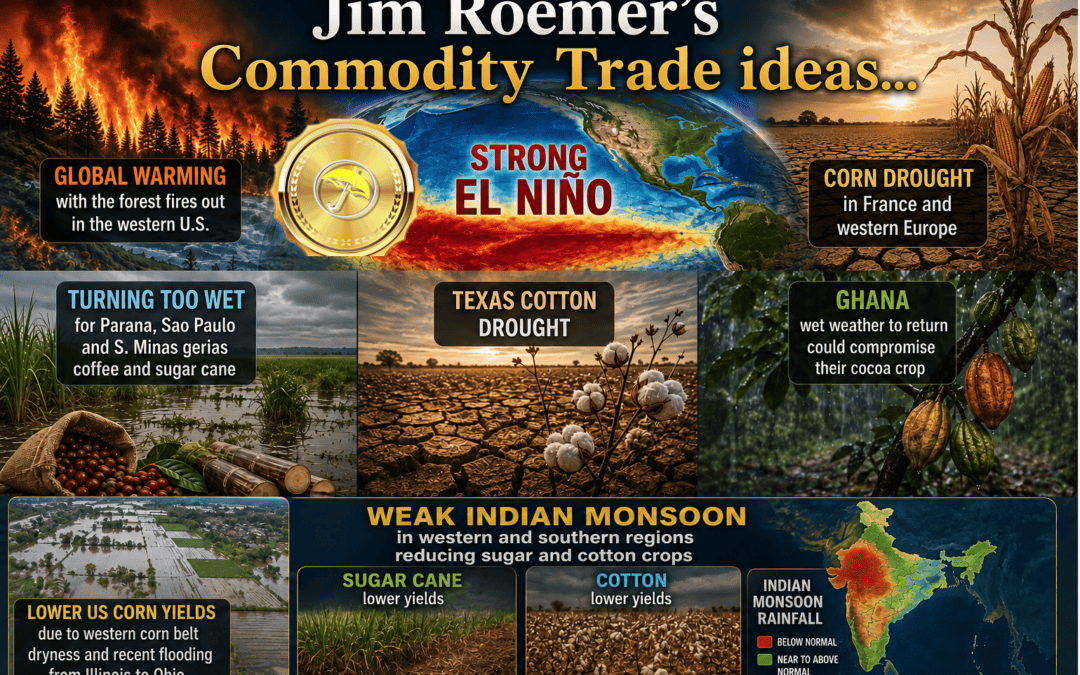
While I have alluded to a more bullish outlook in corn the middle of last week and new crop problems potentially for Brazilian coffee in a few weeks, I am not going to advise with specific trading strategies in everything. Some things, one needs to “read between the lines.”
Below, please find a ton of information. I discuss dryness in western Canada, concerns about Ukraine vs. Russia still helping wheat prices, plus my concerns for some very heavy unseasonal rain in northern Brazil that could lower the quality of the coffee crop and dilute some sugar cane by early September.
Ghana’s cocoa is on “weather watch” from my personal perspective. Some models are suggesting a return to too much rain again soon. It is not as clear cut as it was back in June, when I foresaw flooding and a lower cocoa crop there. This, and El Niño fears, helped cocoa prices rally 20% + in late June and July.
A heck of a lot for me to watch, as usual–not easy.
Here are really my only specific trade ideas over the last few weeks.
Cocoa: A battle between poor demand, a decent Ivory Coast crop and wet weather issues for Ghana’s crop
Long the March 2027 5000-6,000 cocoa option spread. I may have a buy recommendation again soon in futures as Ghana may turn too wet.
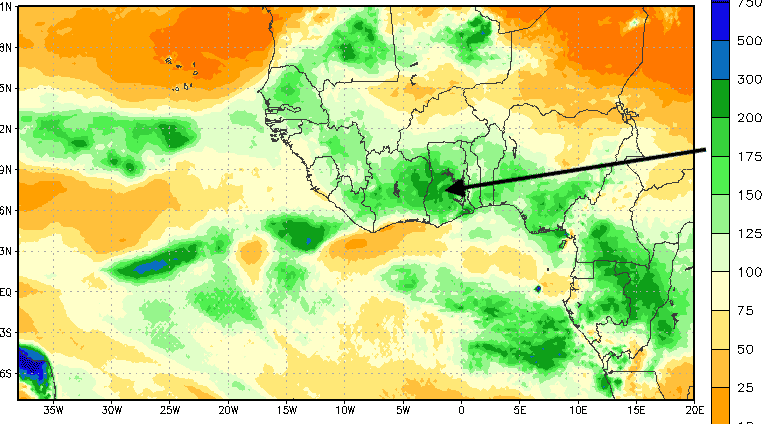
If these rains are correct by the European model of 150-200% of normal rainfall in Ghana (during the next 1-2 weeks), then cocoa prices will be well supported on breaks. I may (??) have a report Monday about the global cocoa situation. Otherwise, I will as we get into the autumn.
What is preventing this market from rallying are strong Ivory Coast exports and a decent crop there. The cocoa market has already rallied 20-25% off the lows on El Niño talk. For that reason, using longer term call options is the safest play for now.
Sugar: I maintained an overall bullish view for the last 1-4 months on breaks due to global “El Niño based” weather problems
Long October sugar over the last two weeks to four months and ahead over $1500-$2200 a contract. Also, long the sugar ETF (CANE) from last April or May and ahead 8-12%.
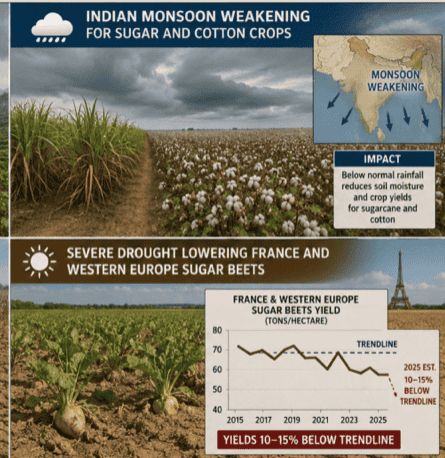
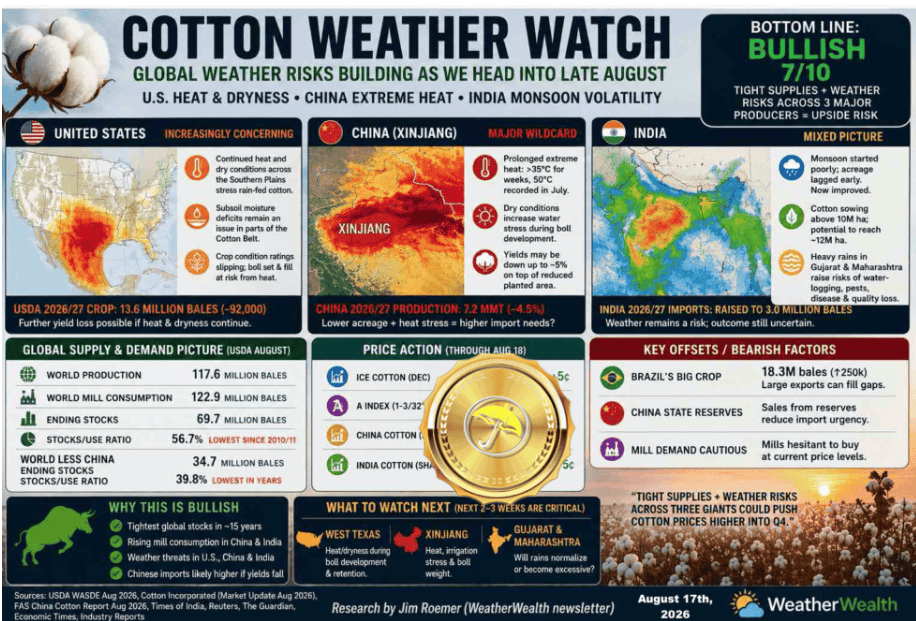
Cotton: For months, I have been bullish towards cotton on stronger demand, the Texas drought and potentially lower Chinese yields and acreage.
Long the March 2027 cotton 90¢-$1.00 call option spread. There is limited risk here. If global crops in China, the US, and India continue to decline, this trade can make about $3,000 per contract with enough time value.
Trying to buy December cotton below 85¢, but it may not get there. Yesterday’s sell-off to 87¢ may be the lowest we go for a while.
The last specific cotton trade was a month or so ago when traders were stopped out right at the lows of 78¢ for a break-even trade. Too bad. The market has soared about 10¢ ($5,000 a contract) since then. See my recent cotton report earlier this week.
Other market sentiment with no specific trades
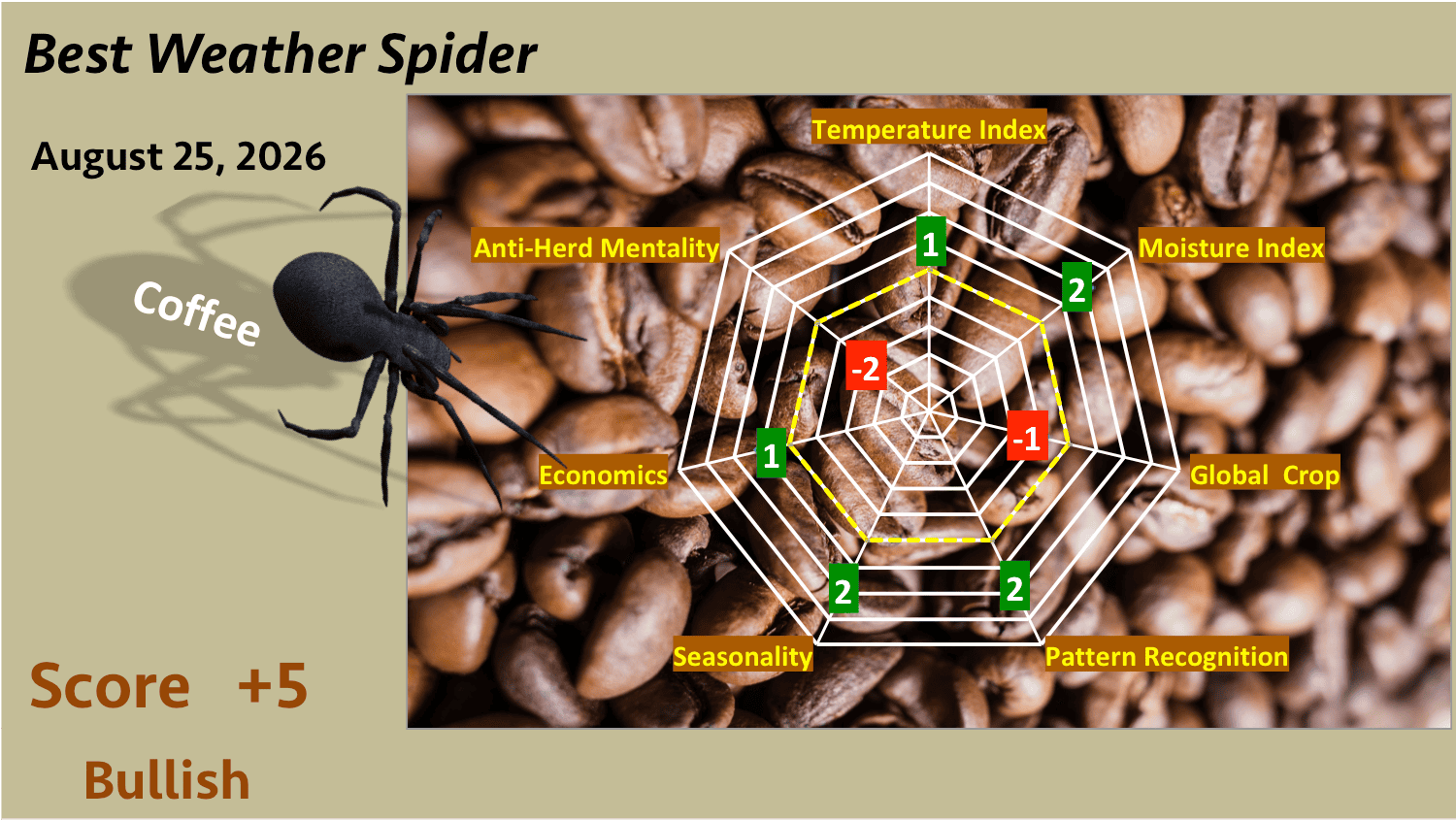
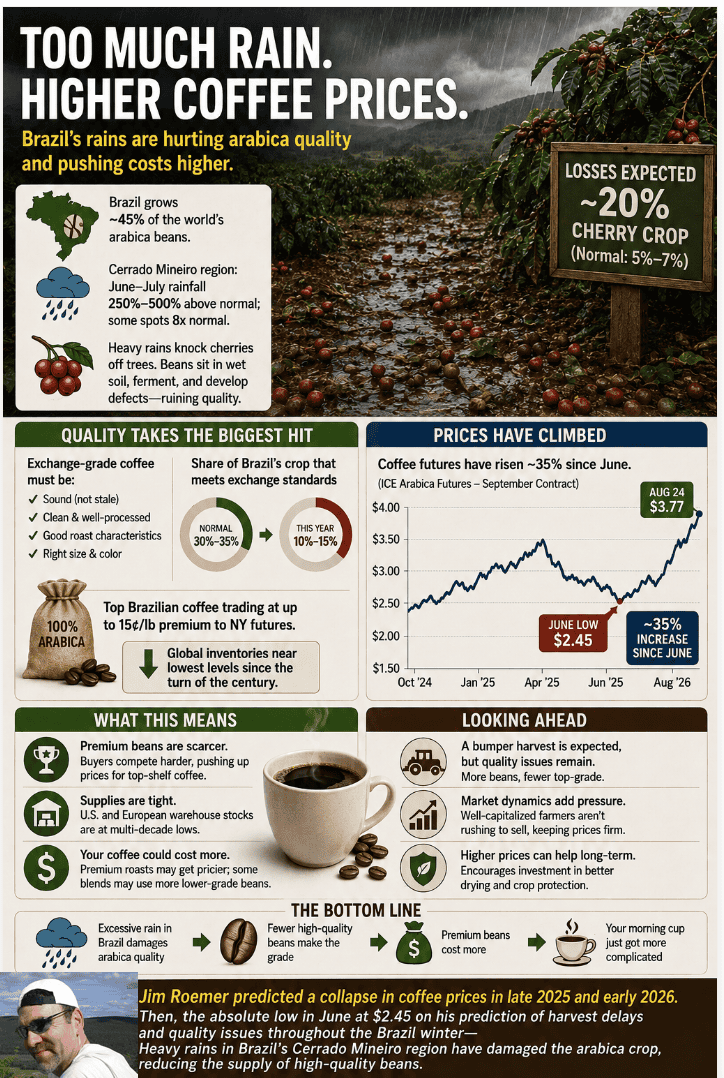
Coffee: Market could worry about too much rain again for northern Brazil
On breaks, I am friendly, seeing very wet weather returning to Brazil’s north. Prices have already rallied a ton in the last few months, and the harvest is 90% complete; otherwise, my Spider would be a very bullish + 8 to +12
Following 8-10 consecutive successful trades in coffee futures or options over the last year, I do not want to press my luck. For example, A $50,000 trading account (doing just one futures or options trade on each of my recommendations) would have potentially yielded 50%, $25,000 over the last year.
The market has rallied so much since I caught the lows in prices around $2.47 back in June, we would have to sell-off sharply in the next week or two for me to issue a buy recommendation.
The questions become: “Will heavy September rains cause concern about an early bloom… or not?” … as well as: “in a couple of weeks, will the market feel that rains are a good thing for the 2027 crop?”… OR “Is too much too early?” Stay tuned.
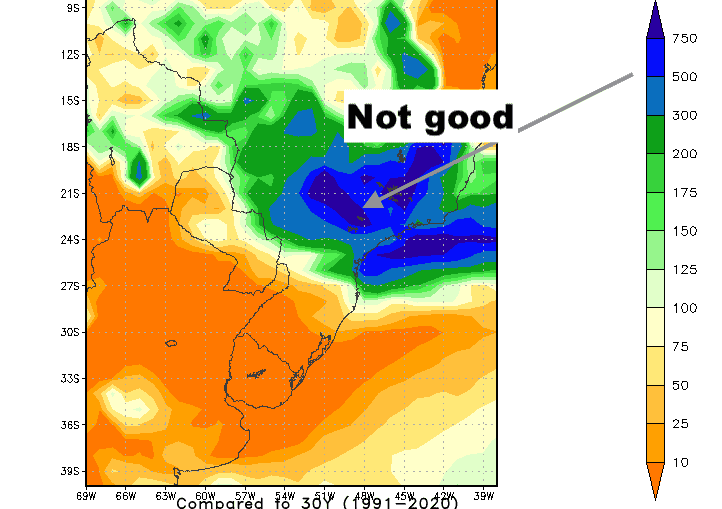
Rain for the rest of the week in Brazil will slow the remaining 5-10% of the harvest. In addition, if models are correct for rainfall 300-500% above normal in about 10-15 days, this could cause early concerns about a premature bloom. This is not good for Brazil’s 2027 crop.
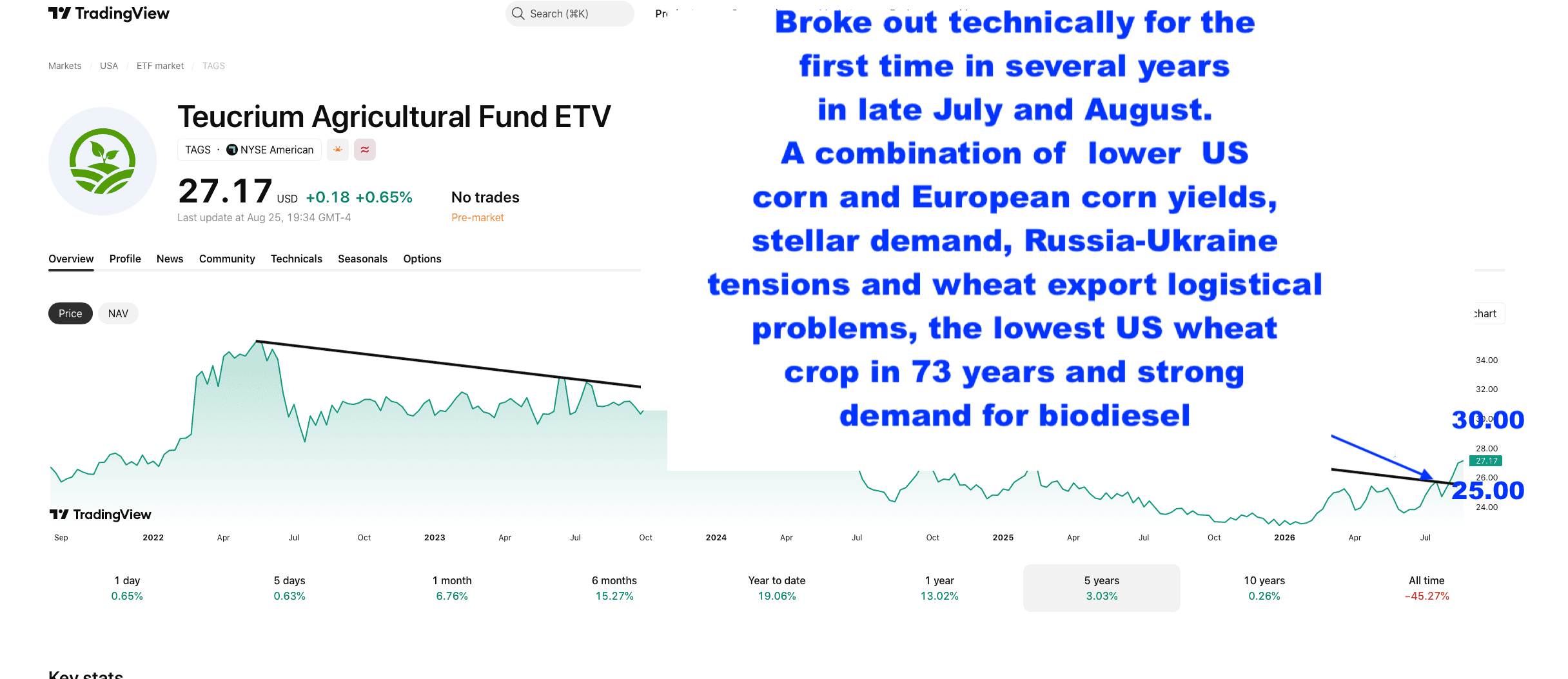
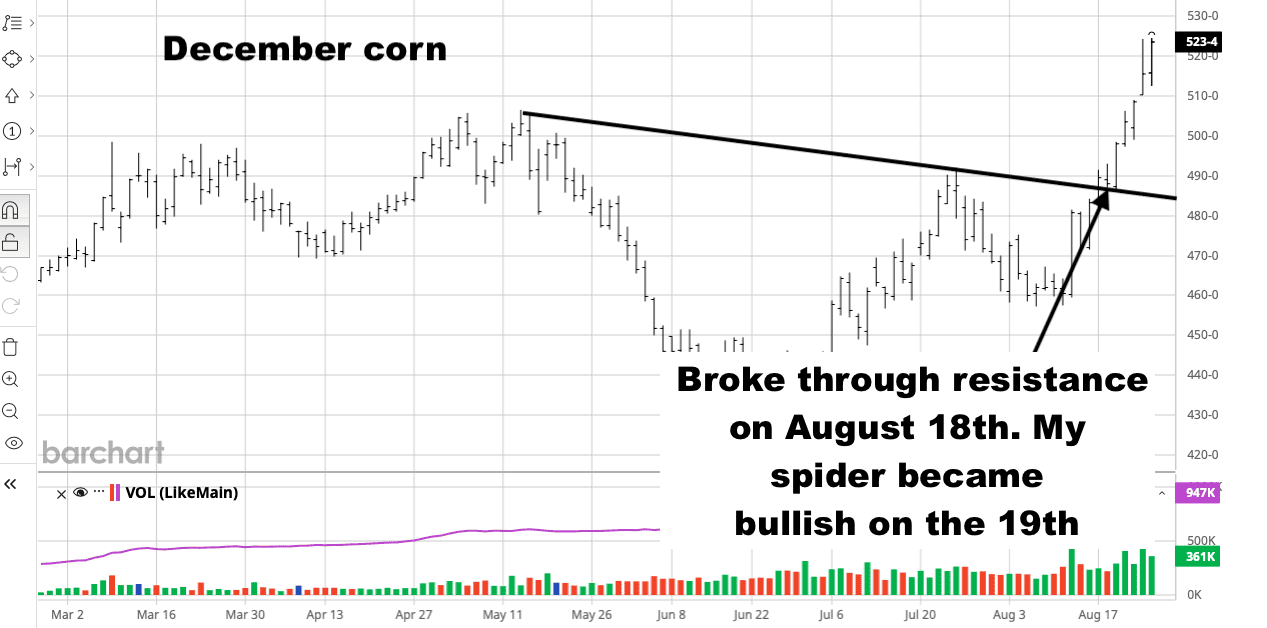
Corn: Market remains in a firm uptrend for the first time in years
Read between the lines, dudes. Better late than never. I became bullish in the middle of last week and sent this out in one of my newsletters. However, I have not “specifically” recommended a buy.
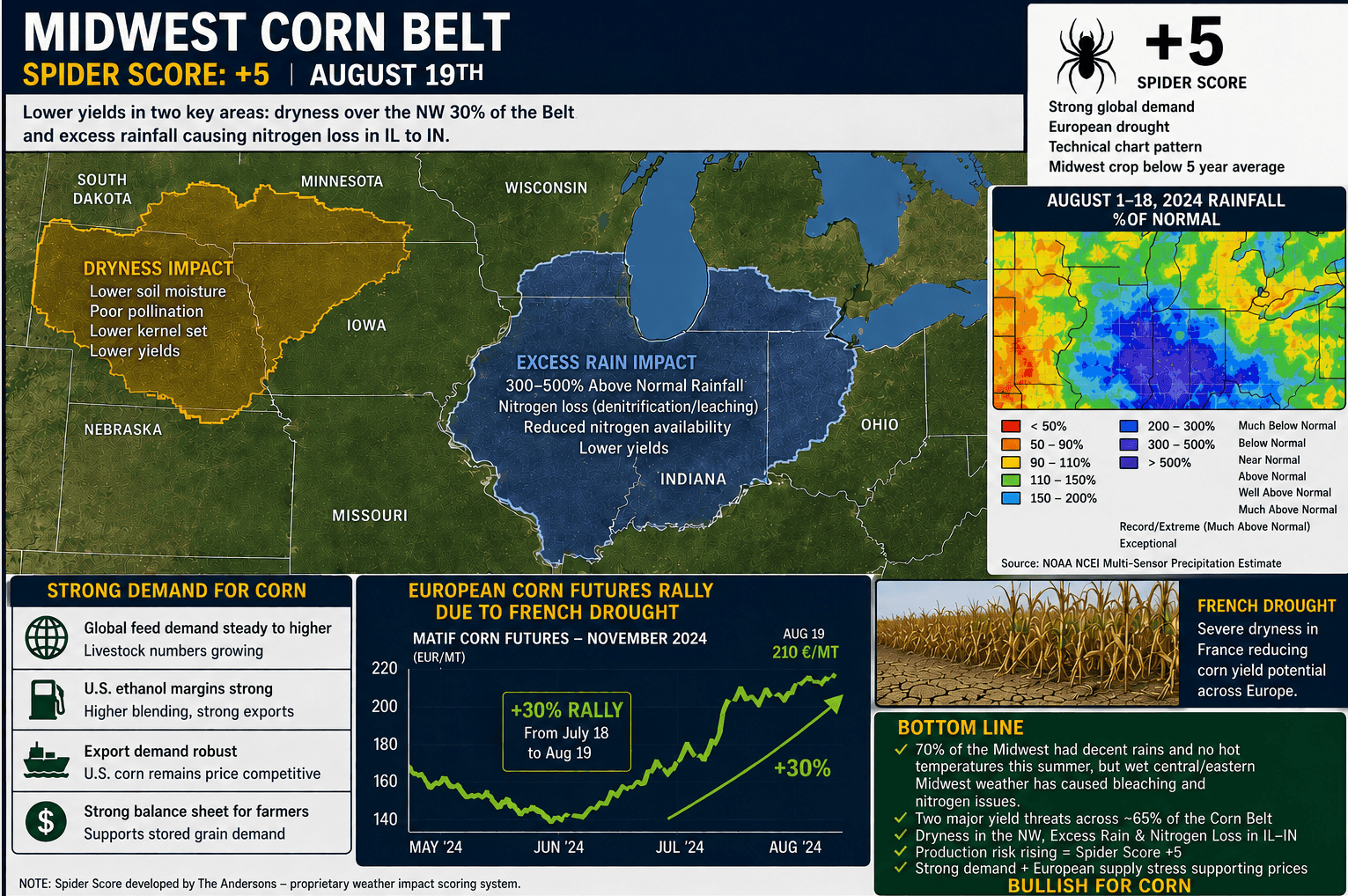
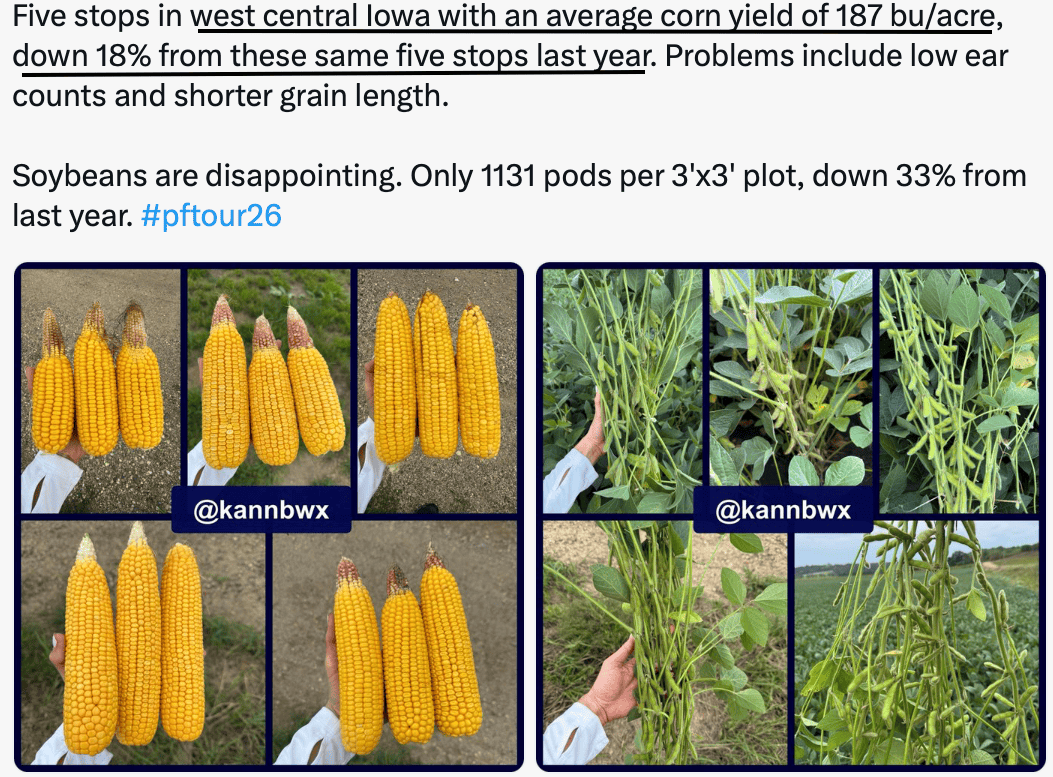
While Pro Farmer tends to overestimate crop damage during their August tours, US corn yields are still less than 178 bu/acre, strong demand and the European drought have created a technically strong market on the charts.
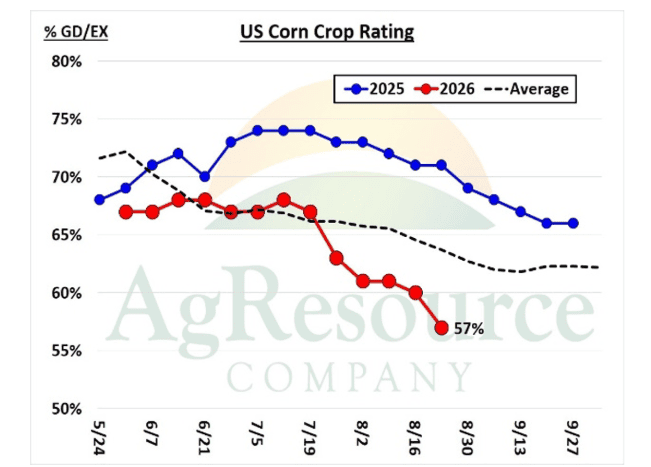
There is still some concern about a lack of rain in the western 30% of the corn belt, especially Kansas, South Dakota, and Nebraska.

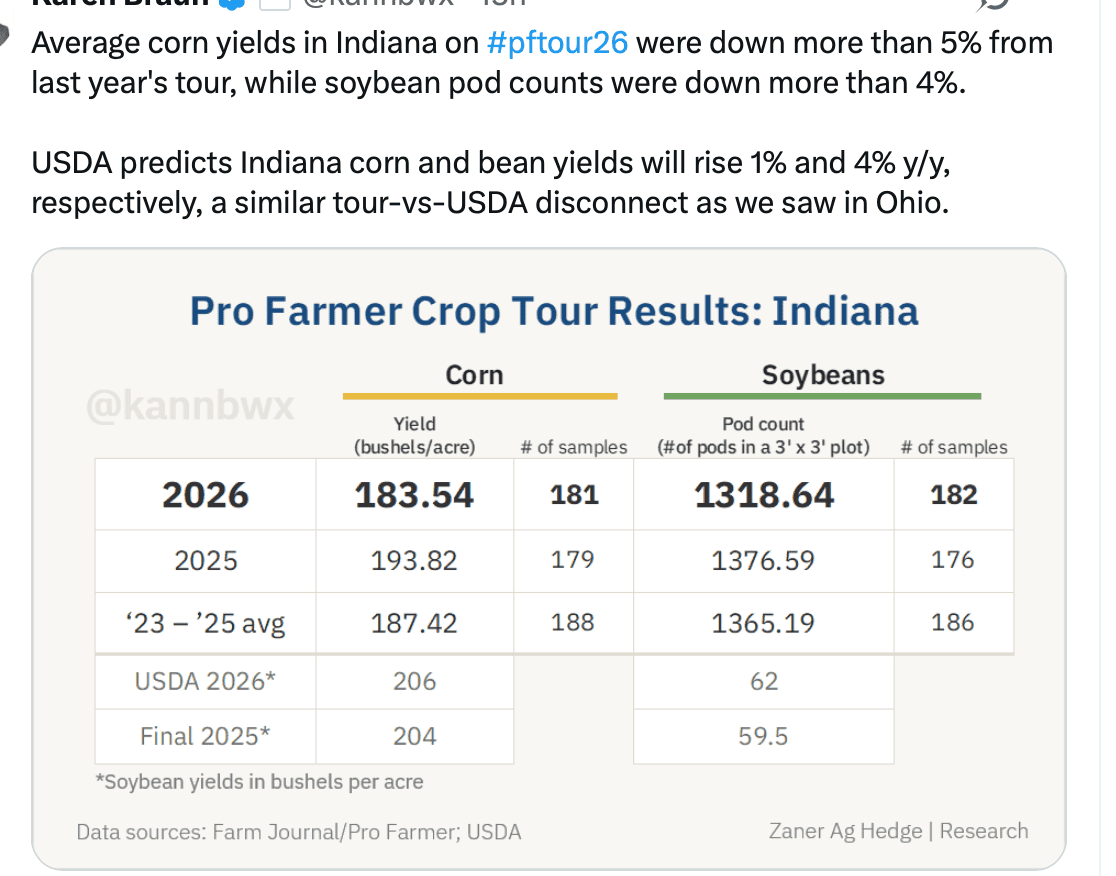
Soybeans: Strong Chinese buying, along with a return to dryness in the western corn belt, keep prices strong.
This market has been affected by recent flooding in the central through eastern corn belt last week, strong new demand from China, a weaker US dollar, and some background concerns about several days of extreme heat (map below) in the western corn belt again next week.
The US soybean crop is still decent, and we are only partly in a weather market. For this reason, I have no new advice at this time that is high confidence.
The chart pattern looks positive for soybeans.
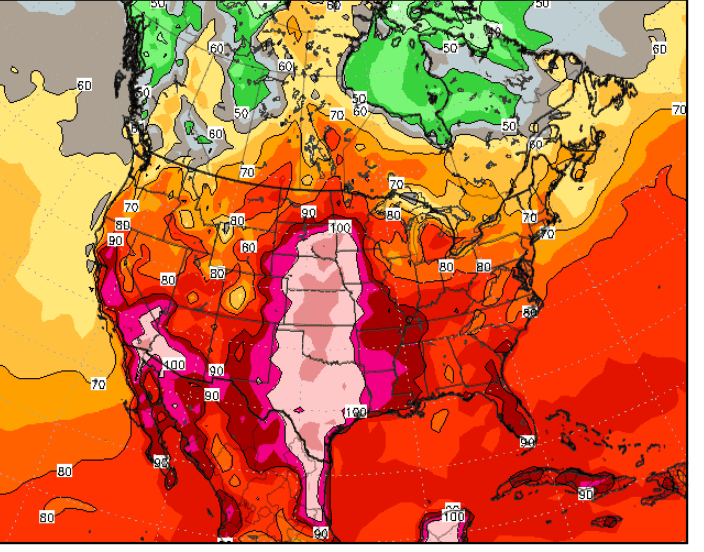
Several days of extreme western corn belt heat and Chinese buying helped soybeans recover on Tuesday
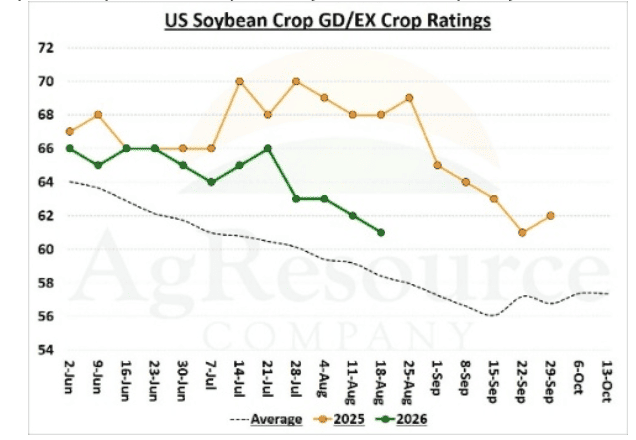
Lower soybean crop ratings and stellar China demand has helped prices rally more than I expected a few weeks ago.
However, I do not see a big reduction in the US soybean crop, even though crop conditions have come down. Other outside factors are influencing trading, as well.
Wheat: Angst over Russia-Ukraine tensions, dryness in western Canada and the southern US Plains help wheat prices
One can see dryness in Alberta that is reducing crop prospects a bit for spring wheat and canola.
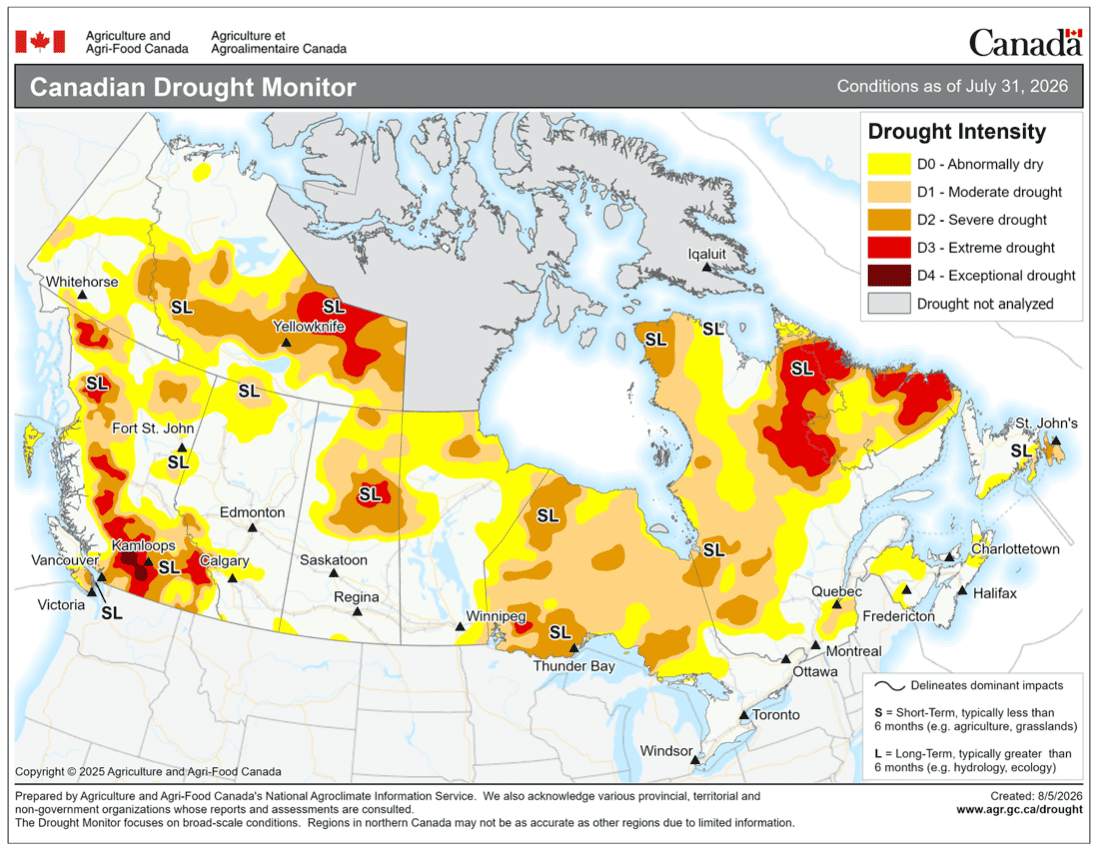
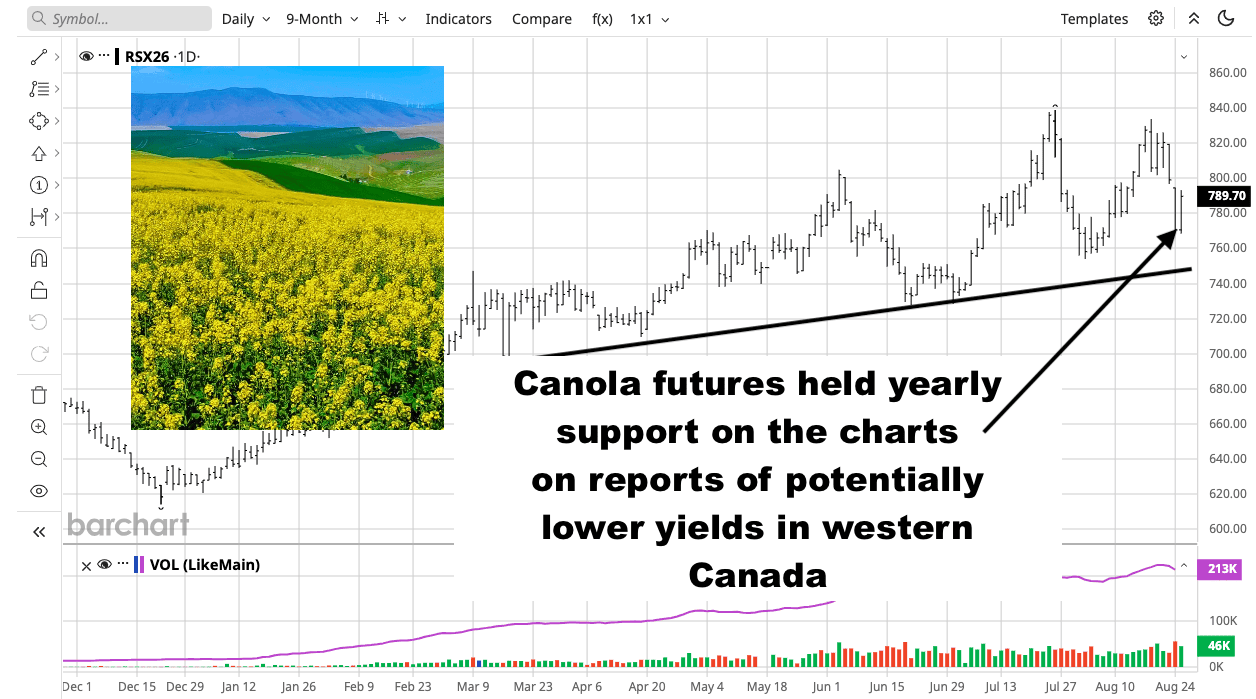
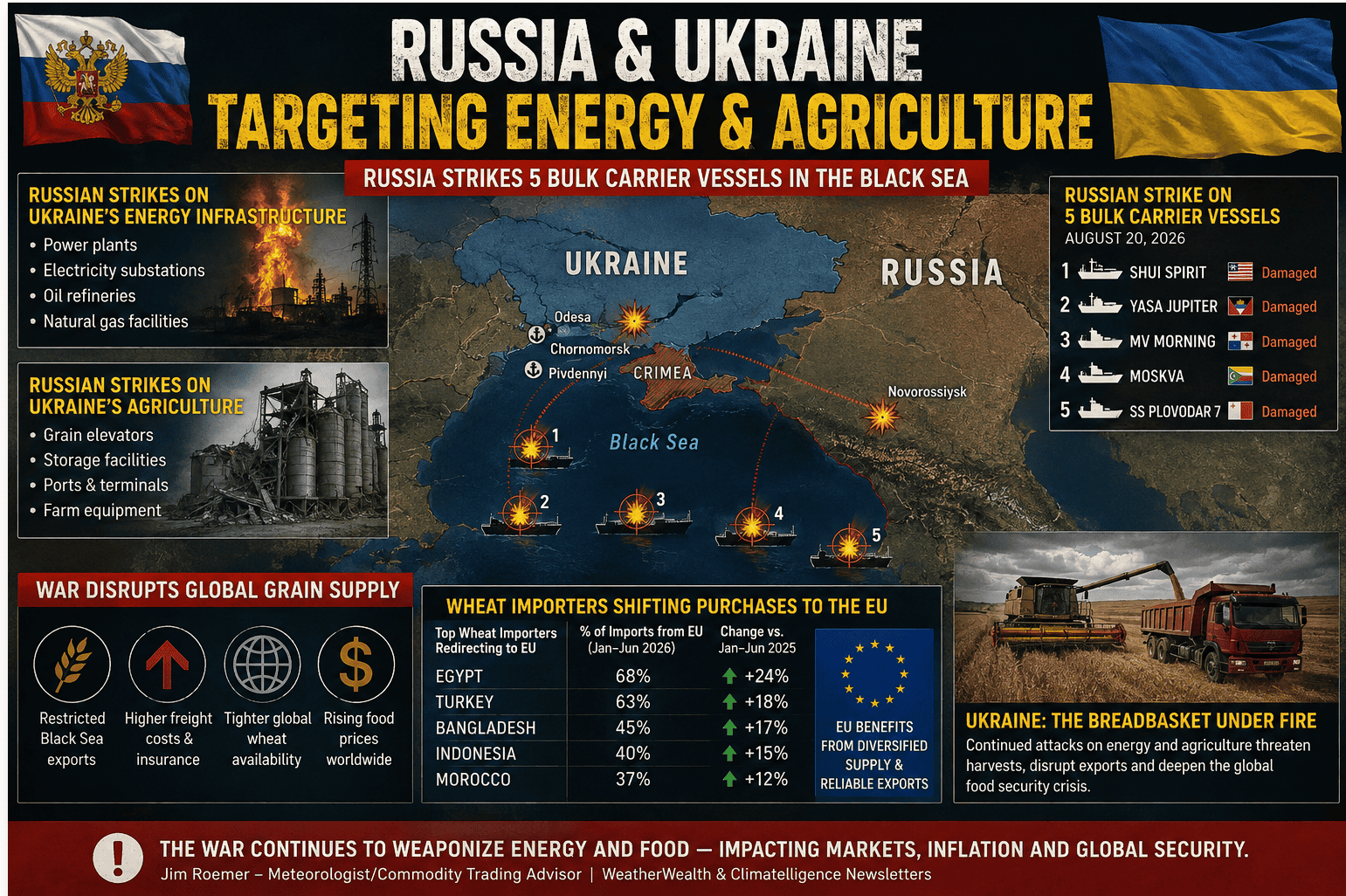
The situation between Russia and Ukraine, combined with the Western European drought to corn and previous US wheat crop issues this spring, continues to support wheat prices on breaks.
Natural Gas: Market remains in tight trading range due to mixed US weather
Prices fell modestly late Monday and early Tuesday on cooler weather this week coming to the Midwest and Eastern US. Large supplies and no Gulf hurricanes are bearish. However, extreme heat (map above) in Texas and the southern US is preventing this market from making new lows.
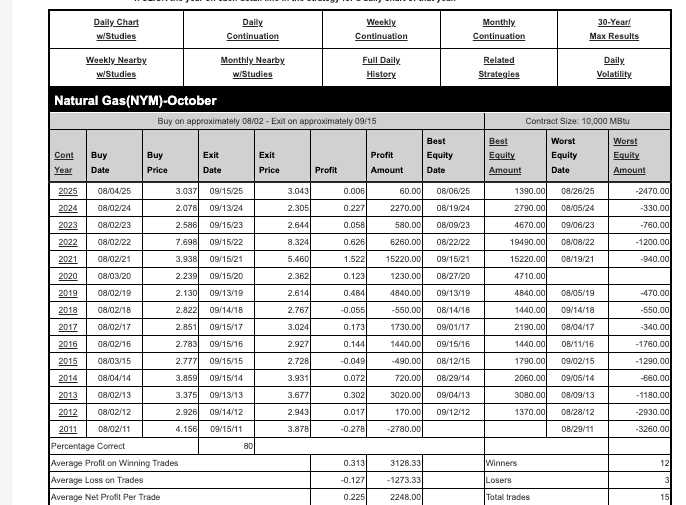
While my Spider has been leaning slightly bearish, I have no high-confidence natural gas recommendation at this time. Seasonally, prices do go higher. Up until now, for the most part, the Spider and trade sentiment were bearish from the $3.20+ area last spring and early summer.
The market rallied a bit from Tuesday’s early morning lows, also in part to some models showing a big US heat dome for the first week of September. Also, Texas and the southern US are still very hot.
