
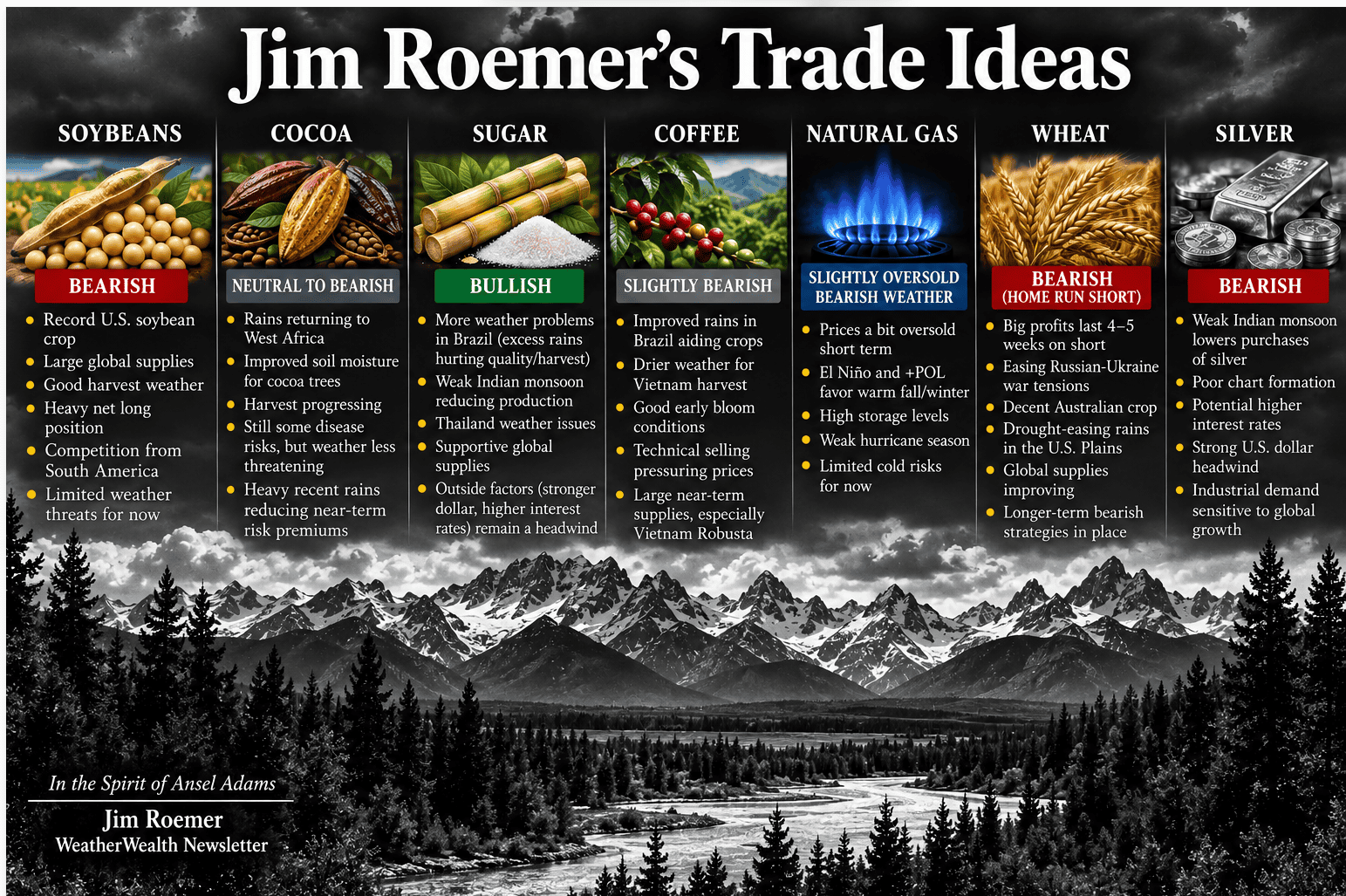
In the spirit of Ansel Adams
In this report:
Video recorded yesterday (Wednesday) about El Niño and some commodities
From Soybeans to Cotton: Big long positions have some commodity traders running for the hills
How a big net long position, the charts, and a lower Brazilian Real hit the sugar market
The factors affecting corn and soybean prices
Coffee prices soar, then collapse again
Cotton Spider is nothing to write home about
Waiting to buy cocoa futures as some fundamentals and seasonal factors have been bearish
Video recorded yesterday (Wednesday) about El Niño and some commodities
This video discusses the following:
Global Angular Momentum: What is it, and why its temporary collapse is helping key Brazil and soybean areas get beneficial rains
Why I felt that the 2015-2016 analog could be one of the best analog fits: Bearish natural gas, bullish sugar from 15 cents months ago, generally favorable South American weather possible for corn and soybeans
Why coffee prices collapsed
My recent bearish call in natural gas prices: I said Monday the market may be oversold, as we had the move I expected. What could happen next?
From Soybeans to Cotton: Big long positions have some commodity traders running for the hills
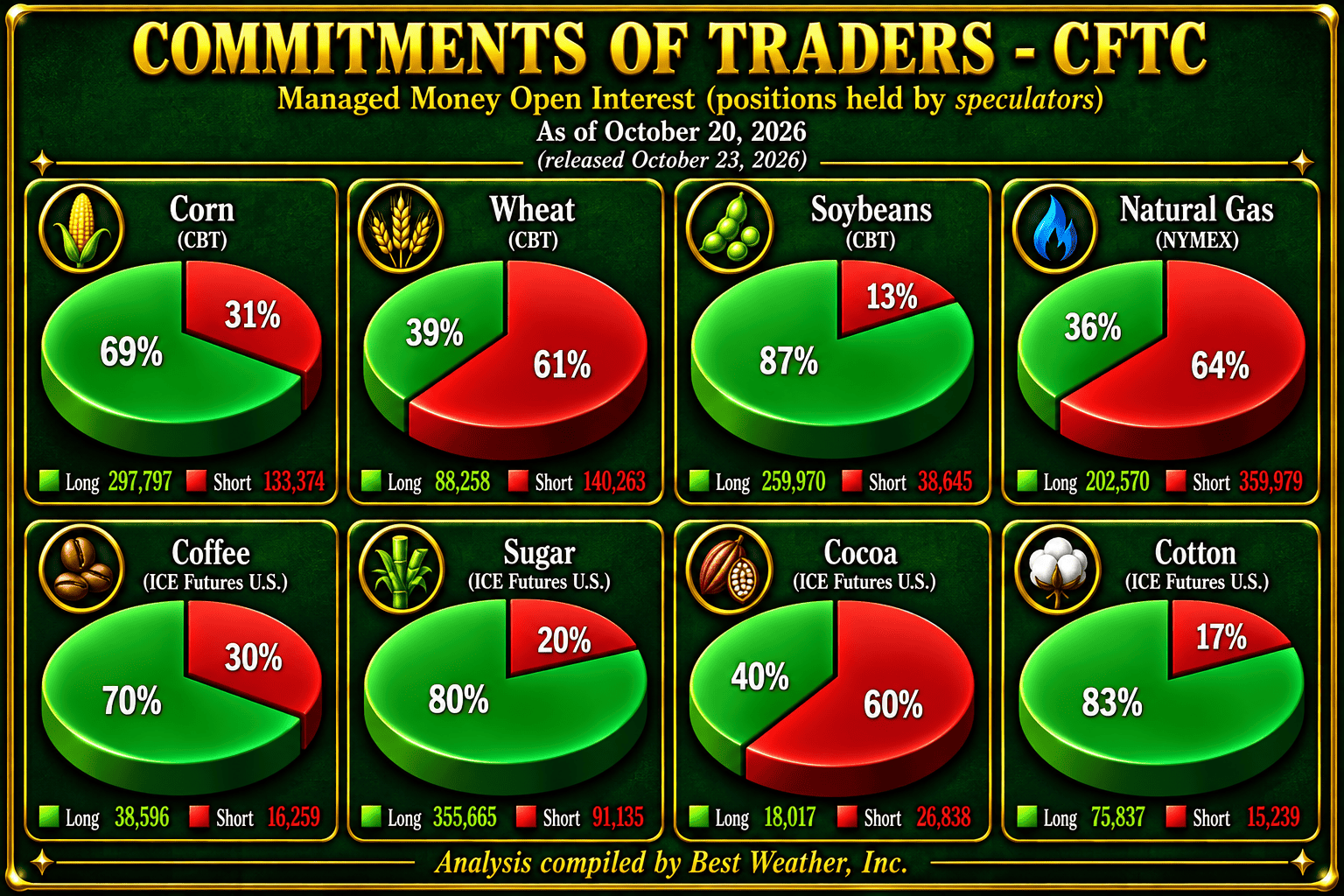
Soybeans, coffee, sugar, and cotton had heavy long spec positions. As a result, and due to the collapsing Brazilian Real and geopolitics, these markets have fallen sharply.
Natural gas has a big short position; that is why, in my video above, the anti-herd mentality is bullish (+3) while everything else is bearish.
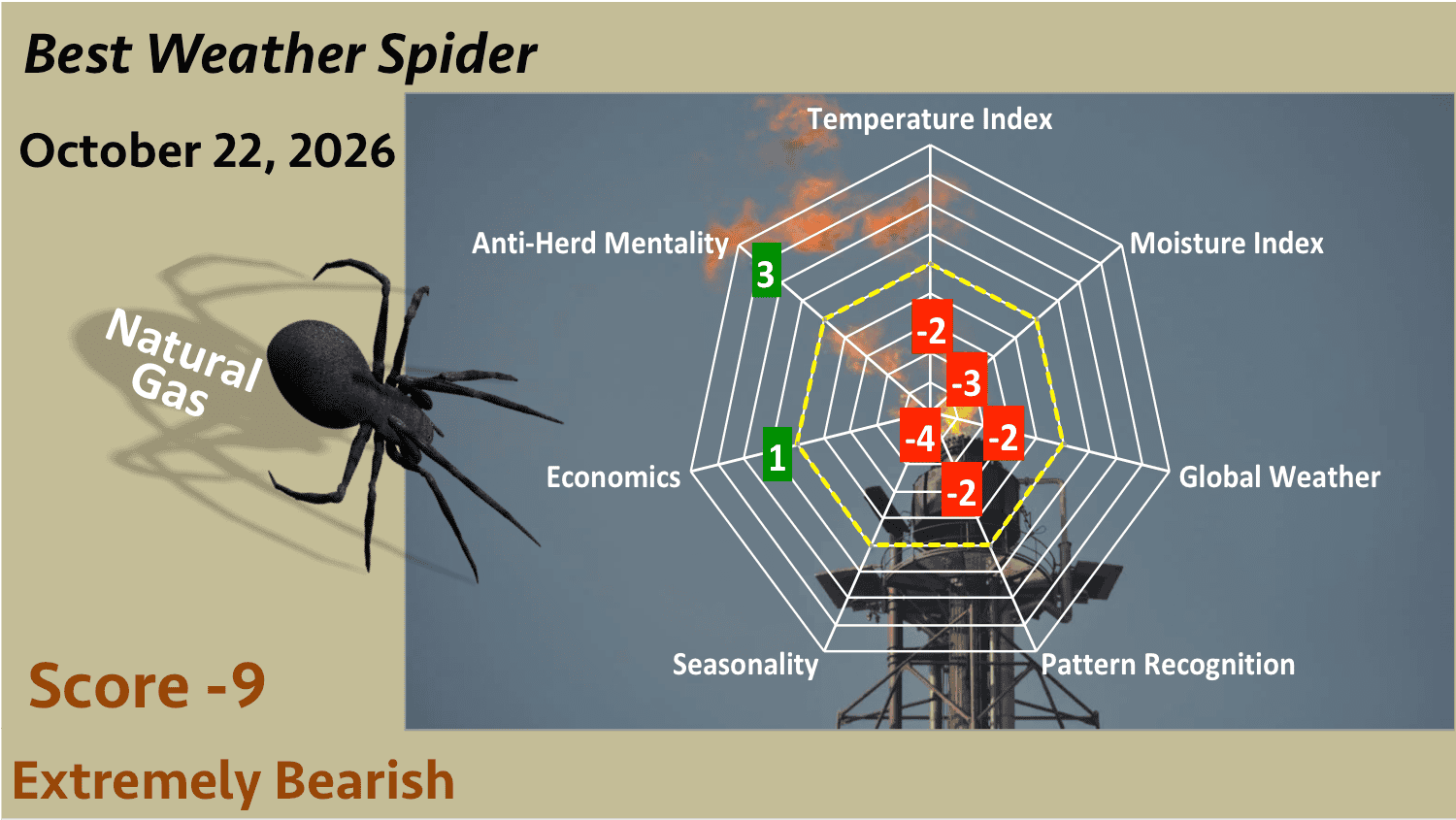
On Monday, near the lows, I advised booking some profits on the long February $3.50 put option from two weeks ago by selling the February $3.00 put against it. This trade is up around $2,000 per contract. Maintain a short position in the inverse ETF (KOLD) longer term. That ETF is up 15-20% since I made the recommendation. Otherwise, I hope shorts cover in the next couple of weeks. If they do and we get a decent rally, I will recommend selling futures or short call options at some point, based on my warm fall and early winter forecast.
How a big net long spec position, the charts, and a lower Brazilian Real hit the sugar market
The weather remains bullish for sugar on my Weather Spider, but other outside factors do not.
Temperature, the global crop score, and the moisture index are all bullish. That is why sugar prices have rallied 30% since my initial buy recommendation in April and May.
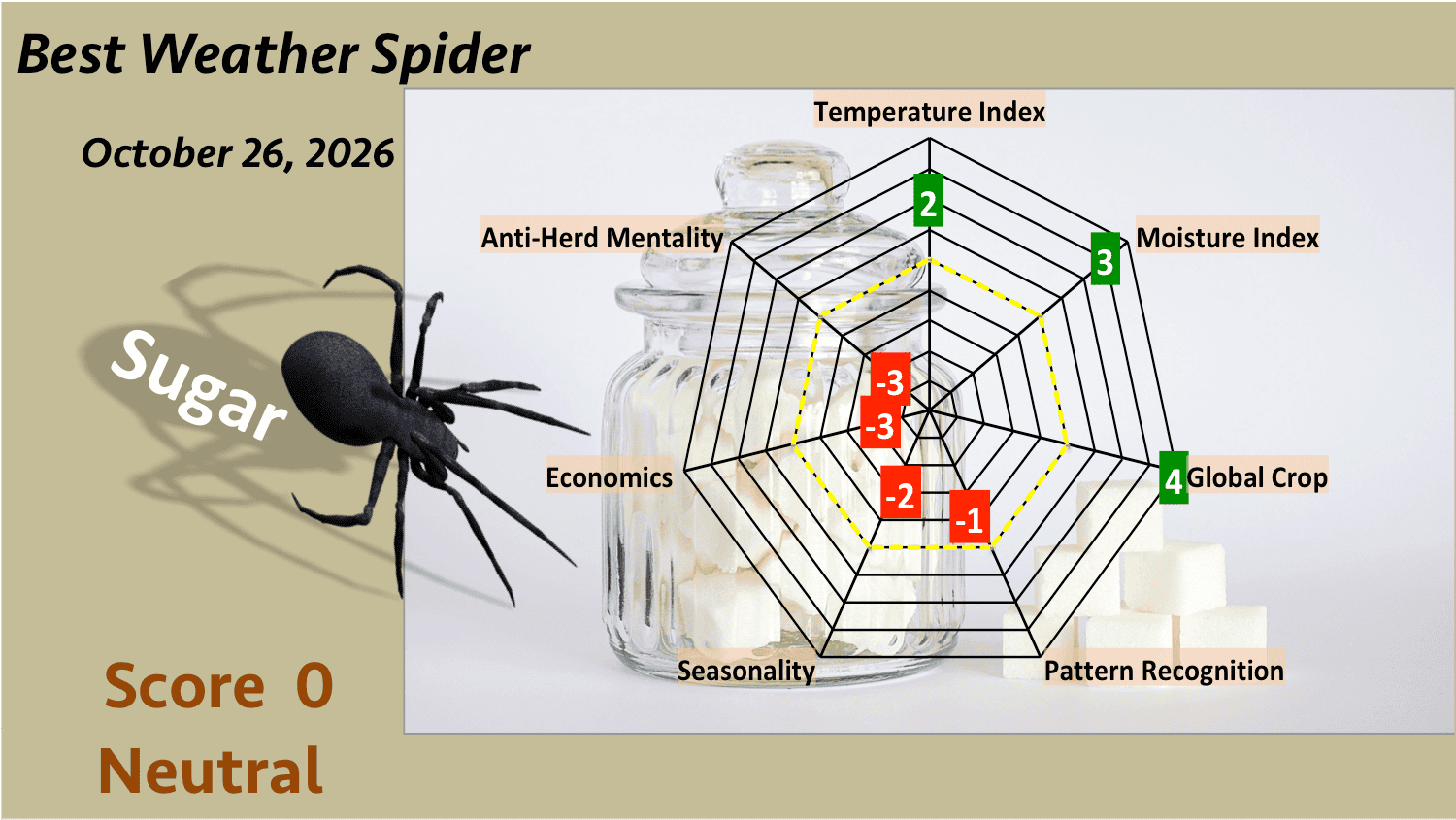
However, seasonal factors became bearish, the charts, (which were quite bullish), neutral-to-bearish on Monday and the economic score bearish to very bearish at a (-3).
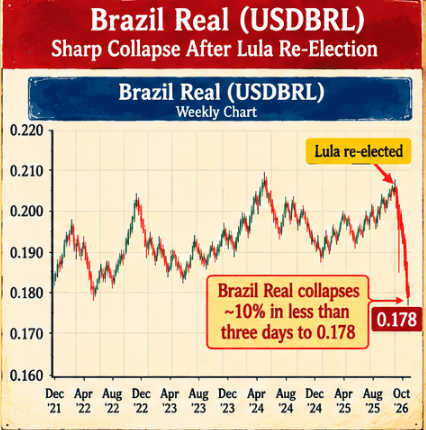
What is the economic score? Other fundamentals other than the weather: The lower Brazil Real due to the surprise results of Brazil’s presidential election and India’s decision NOT to convert as much sugar to ethanol. The easy money was already made last summer and through early October.
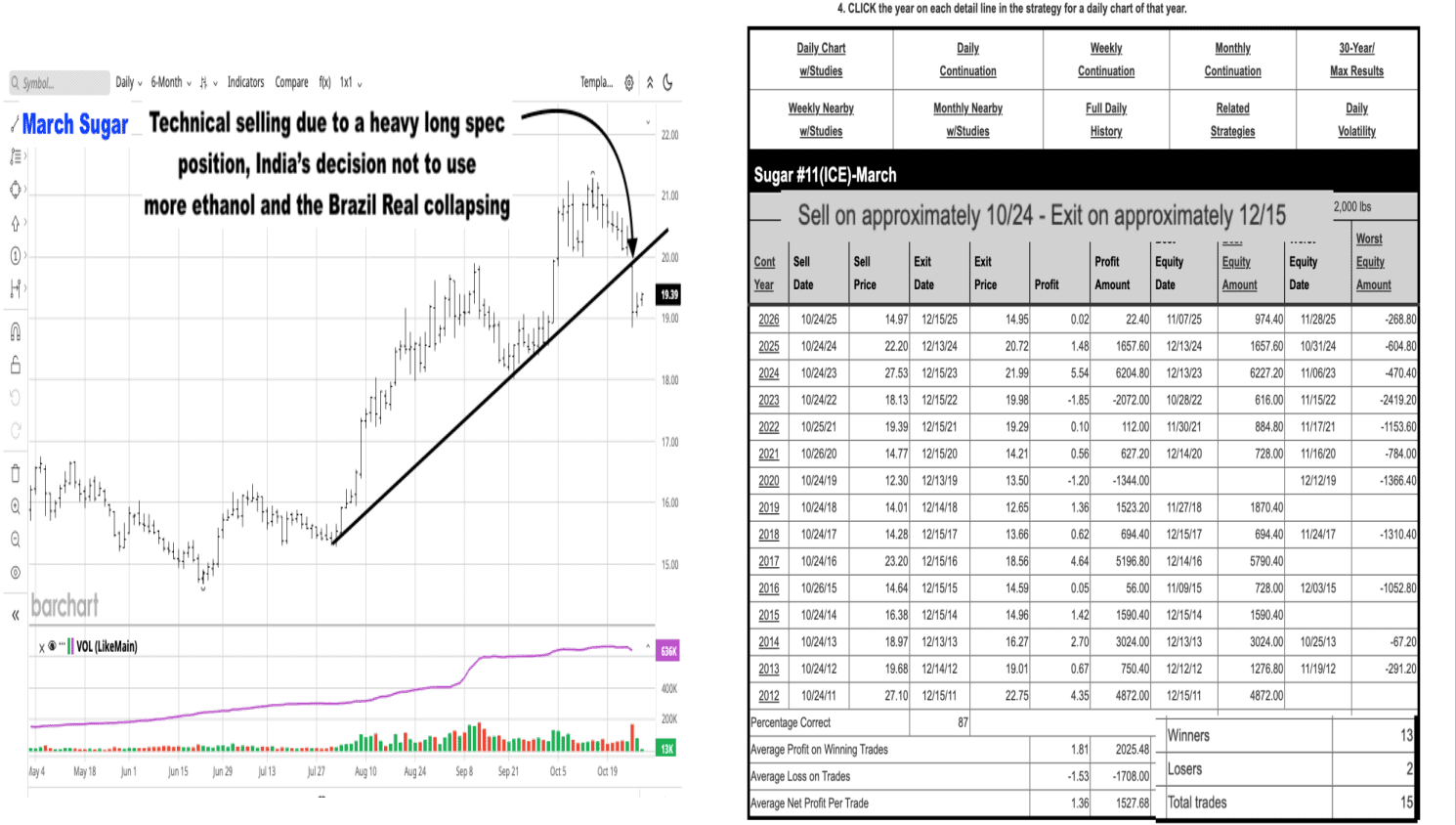
I advised buying March sugar (for those who missed the bullish 20-30% summer move up) around 9.70 on Monday, and you were stopped out with an $800 loss. Too bad, the market will go higher again and the Spider more bullish later this autumn. Otherwise, a small long position in the ETF (CANE) is warranted, even though my Spider is neutral for the moment.
The factors affecting corn and soybean prices
An “over-reaction to perceived US crop problems” and soaring crude oil prices drove the major summer rally.
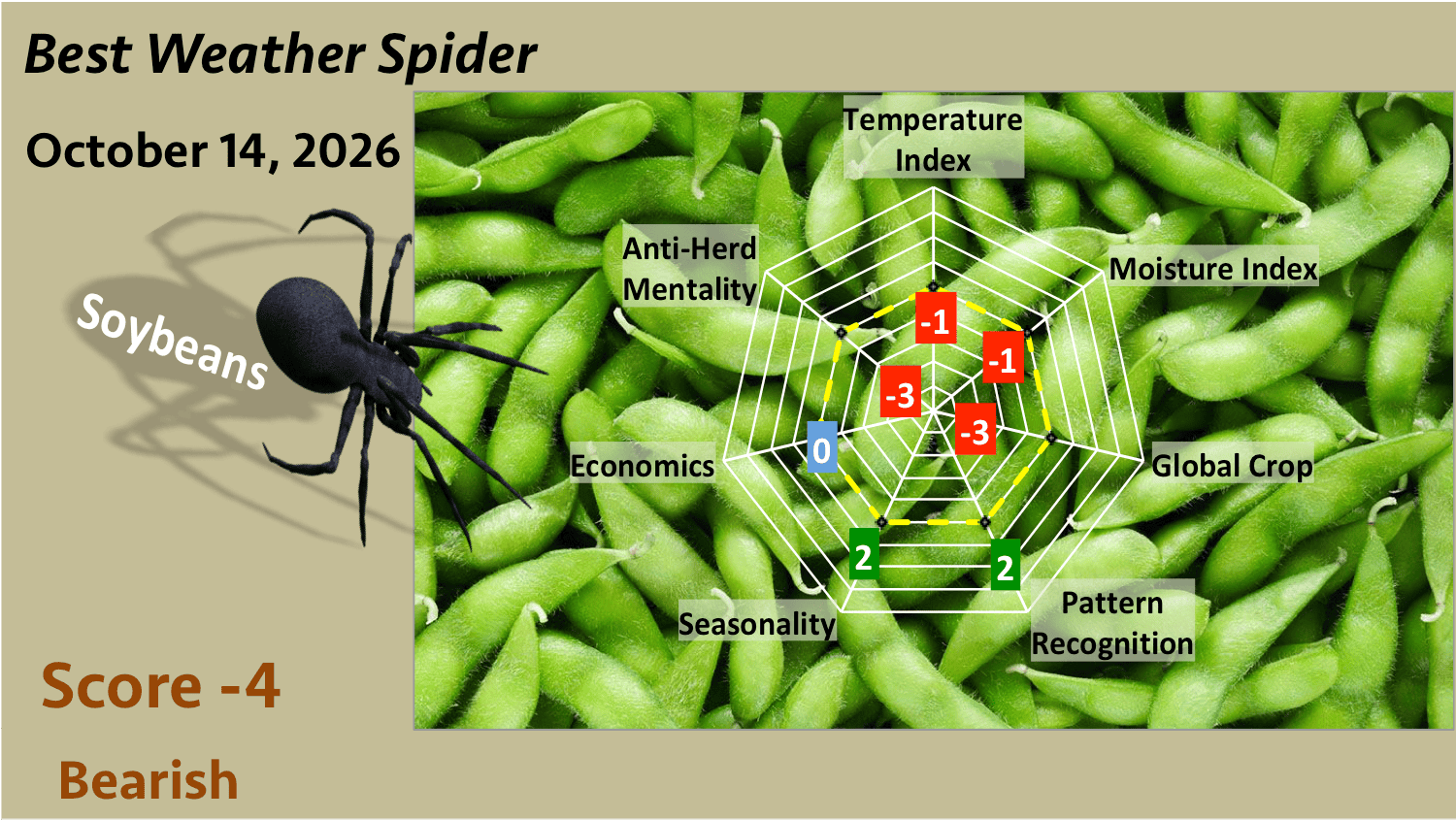
With a record US soybean crop (-3) and decent early South American weather, prices have fallen sharply in recent weeks.
The pattern recognition (charts) actually became pretty bearish a week or so ago. Hence, this score of (+2) is actually (-2) now, which may take this old spider to a very bearish (-8).
However, with geopolitics and minor harvest delays in the Midwest next week, I am unsure how much lower prices will go for now.
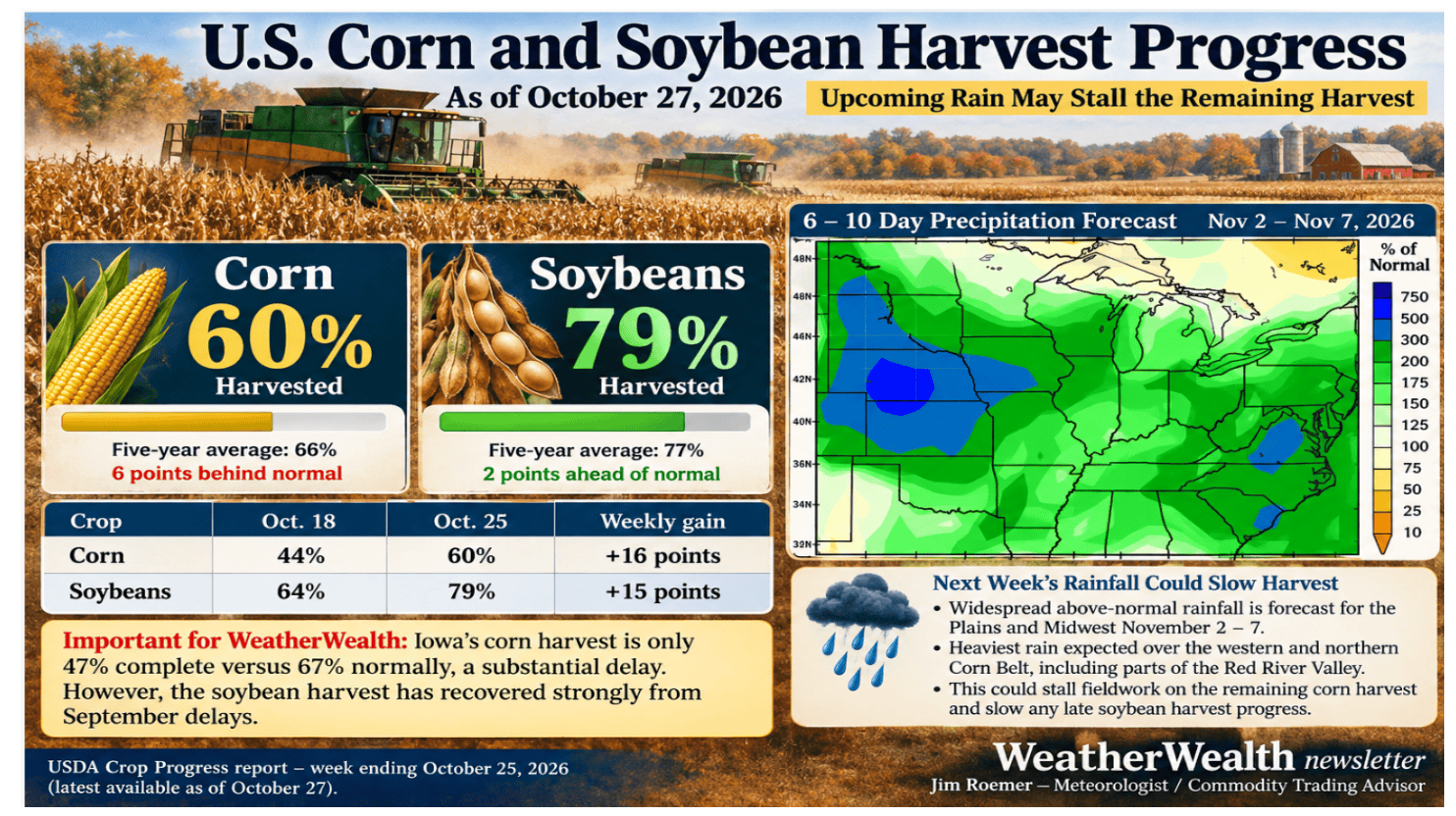
Wet weather (blue next week) will cause minor harvest issues in the western corn belt. Iowa is the furthest behind. While harvesting is active this week, rainfall of 300-500% of normal will hit some key areas next week.
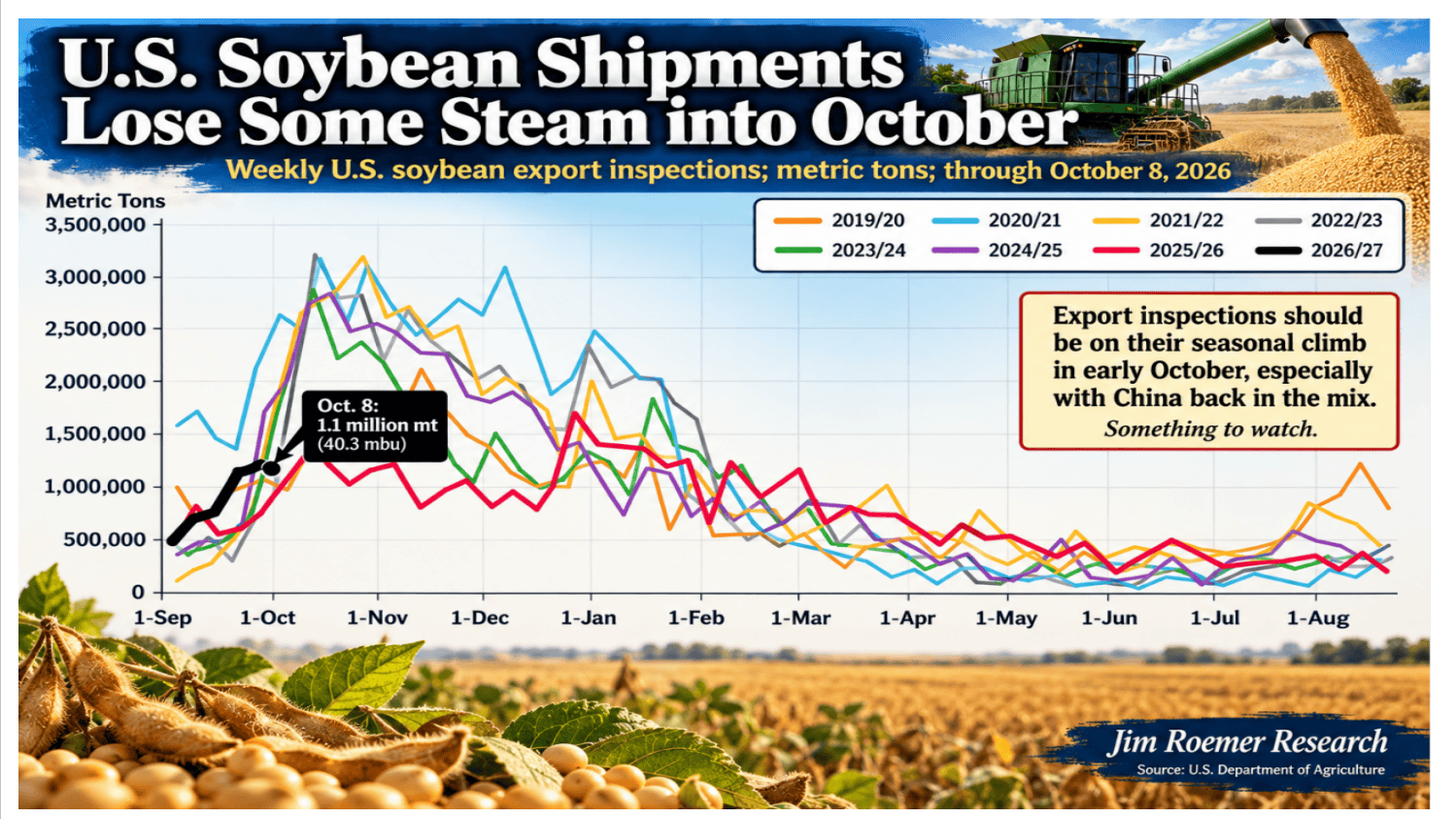
Part of the reason corn and soybeans have fallen is due to heavy long speculative positions. Also, exports have not been optimal. They should pick up after harvest in the next few weeks.
While a post-short-covering rally in corn and soybeans is always possible, I don’t know if I will have a buy recommendation at any time soon, unless I see major weather problems in Argentina and Brazil.
No specific advice, but read between the lines. Two weeks ago, I expressed a fairly bearish leaning for soybeans at that time, some 40-50 cents above here. A short-covering rally is possible after the US harvest, but unless I see major weather problems for South America, the highs in corn and soybeans were made weeks ago.
Coffee prices soar, then collapse again
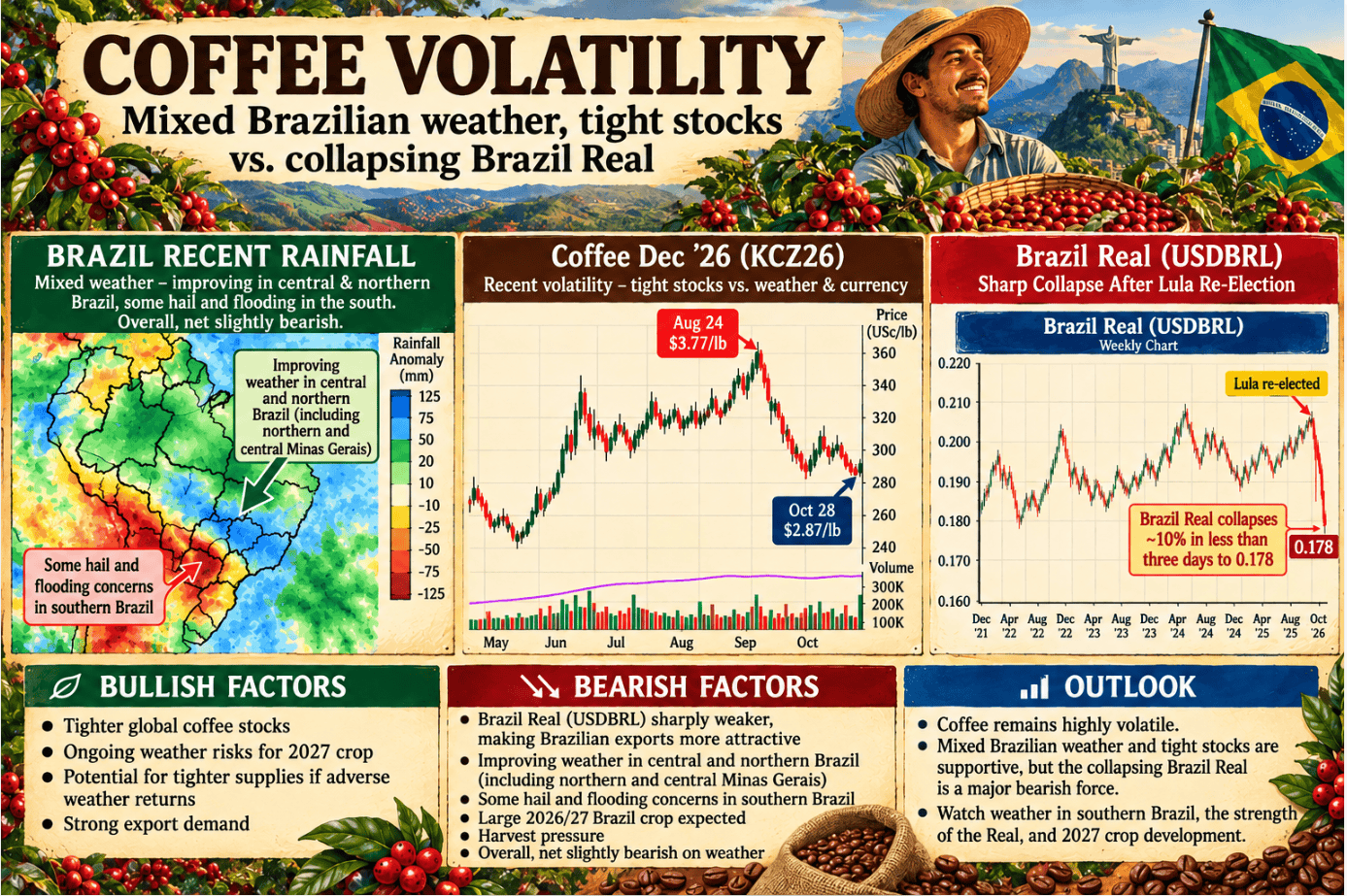
The lower Brazilian Real, technical chart selling, and “improved Brazil weather” have offset tight supplies.
Many analysts have felt a super El Niño could lower Brazil’s coffee production later this year and in early 2027. This is NOT always the case.
After my initial bullish attitude a few weeks ago on hail and flood damage in the south, improved rainfall throughout the rest of Brazil and improved drying weather for the Vietnam harvest have pressured prices.
Cotton Spider is nothing to write home about
My weather scores (Temperature, Moisture, and Global Crops) are all slightly to moderately bullish. Wet weather in Texas will delay the harvest; the weak Indian Monsoon could still lower their crop production. However, we typically need major crop problems in China and stellar demand to get prices to $1.00 per pound.
Last June and July, I thought prices might reach the $1.00 mark. But here are the problems for a major new bull market:
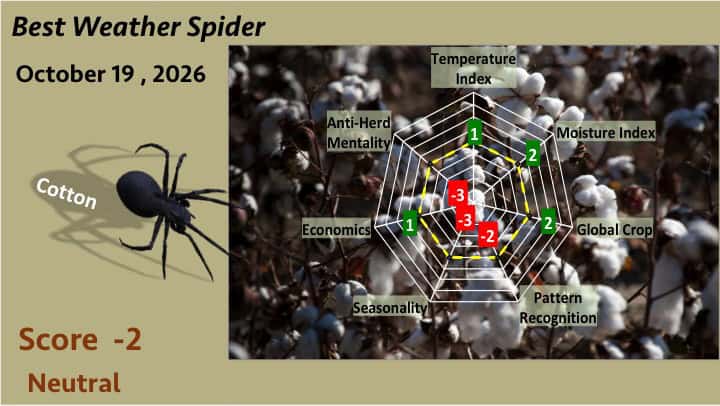
Following my bullish view on US crop problems since 73¢, the last futures trade bought December cotton around 87¢ and got stopped out below support at 84¢. This made the pattern recognition modestly bearish (-2). Seasonal bearish factors end in November (-3). The problem is that there is still (surprisingly) a big net long spec position (-3) and worries about global demand slowing down. Modestly bullish global weather and crop scores have offset this slightly.
Waiting to buy cocoa futures as some fundamentals and seasonal factors have been bearish
The last big cocoa futures trade, potentially over $15,000 a contract, was last June or July, when I predicted a big move up on heavy rains in Ghana and disease issues. Since then, I’ve only advised conservative option positions over the last few months. However, I DO NOT see a big rally in the short term.
This market keeps chopping back and forth due to various fundamentals: Big nearby supplies hitting the market (bearish) and seasonal factors (bearish) vs. potential El Niño crop issues this winter (potentially bullish this winter if a strong Harmattan in West Africa).
It is well known that the Ivory Coast and Ghana crops have low pod counts. That is why prices rallied from $4000 back in May and June to over $5500.
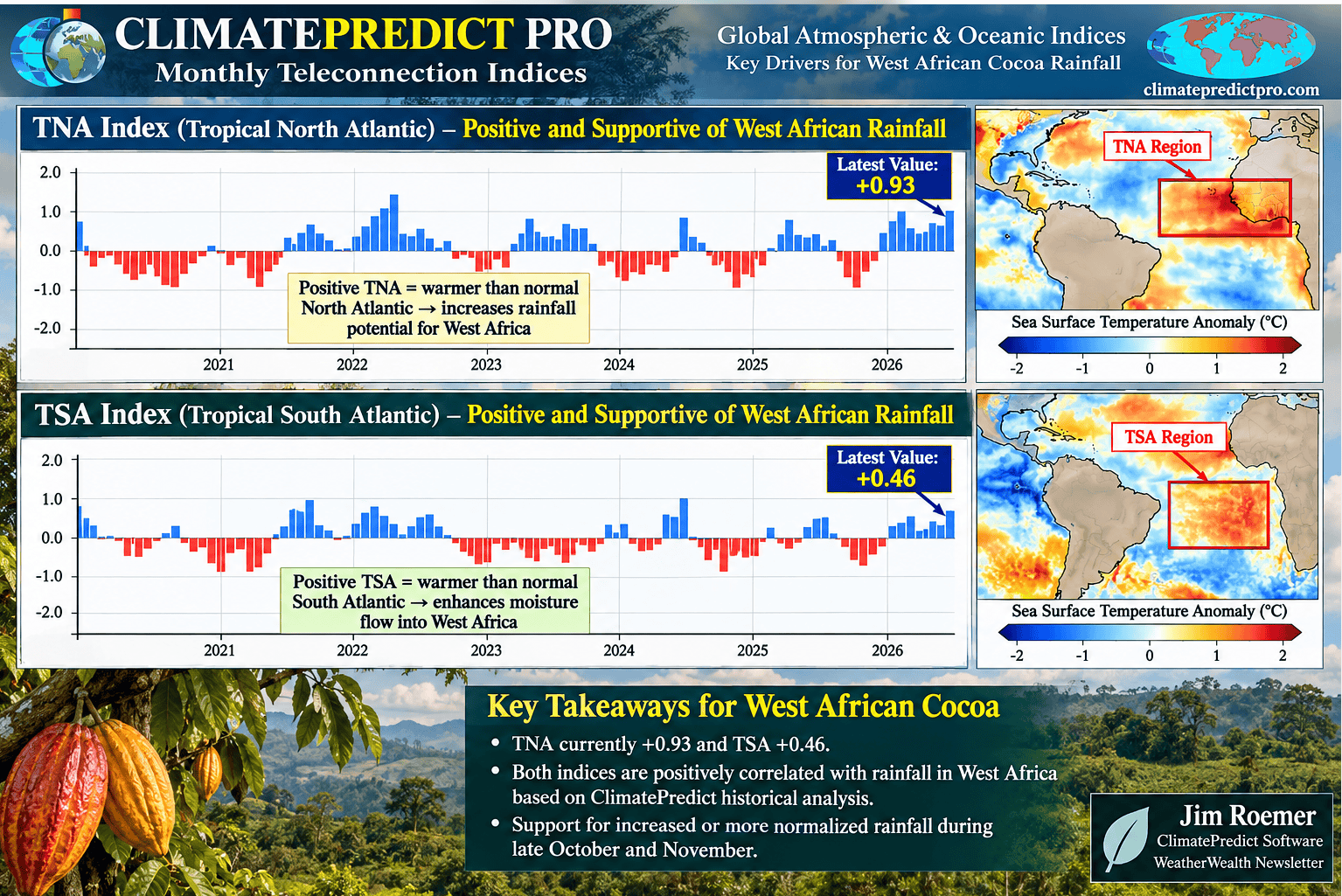
The warm tropical Atlantic (positive TNA index) is one reason why my ClimatePredict program has predicted a slight increase in rainfall for West Africa heading into November. I believe this is another reason prices cannot rally above $6000.
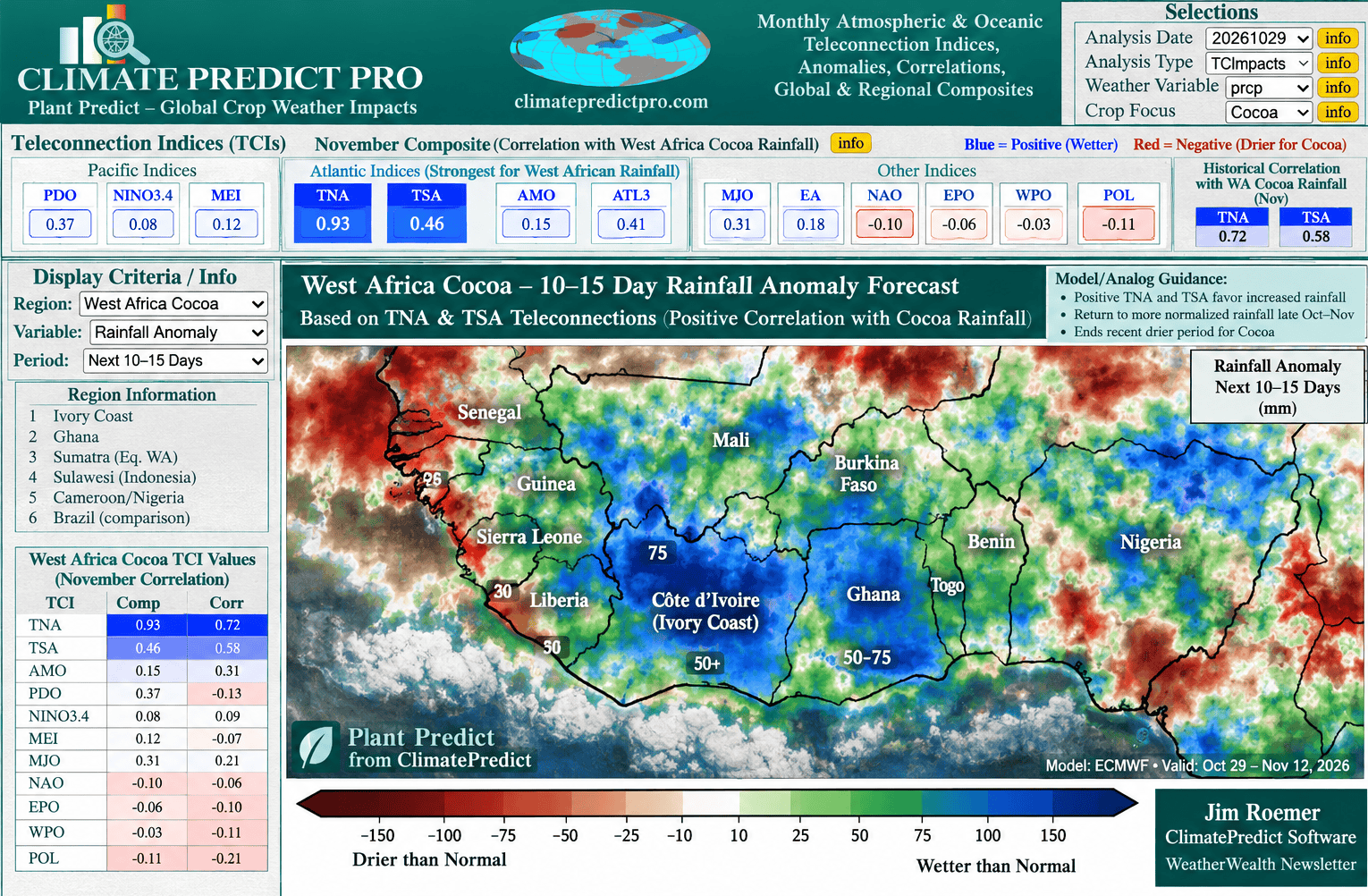
Short the March 2027 $5000 put option and long the March 2027 $6000 call option has done nothing in the last month or two. Short-term confidence is low, but hopefully we will at least stay above $5000 this winter. Option volume is low, but that’s been my ONLY advice for the last couple of months.